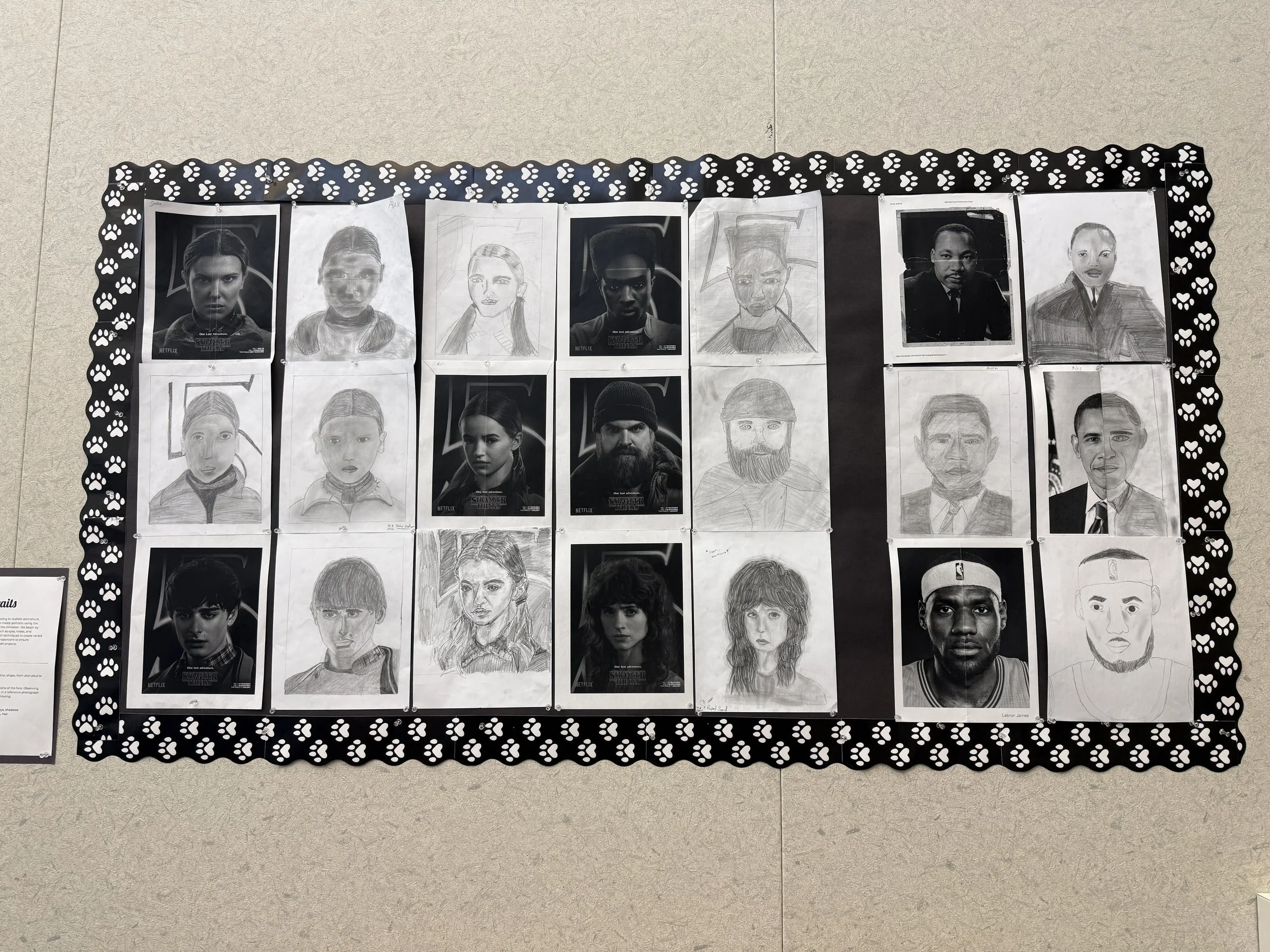
Ages 11-14: Purposeful PracticeThis section represents work from an introductory middle school visual art elective taught over a trimester. Students met four days per week for 30–40 minute studio sessions designed to build foundational skills in drawing, color theory, and creative problem solving.
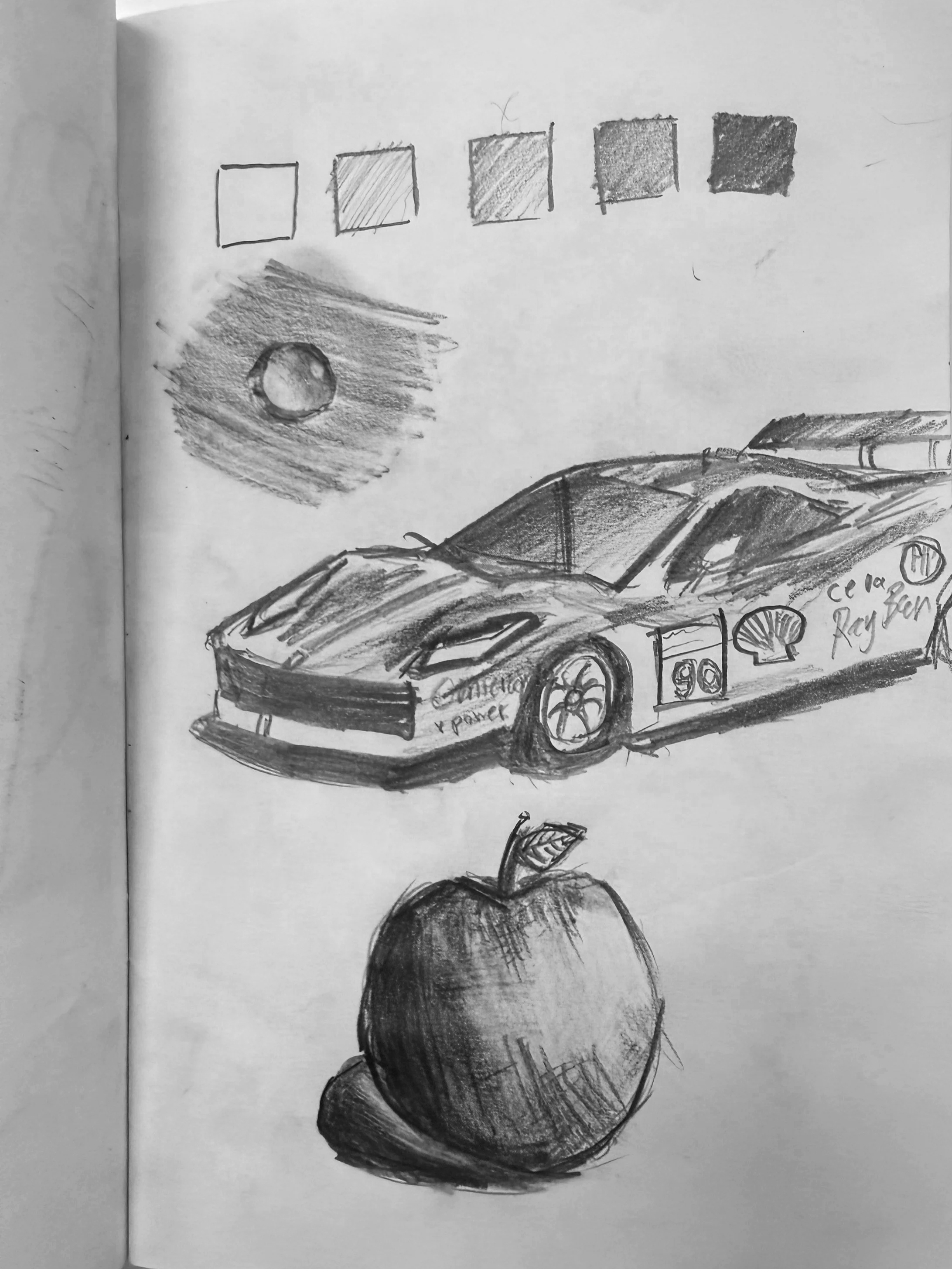
Observational Drawing
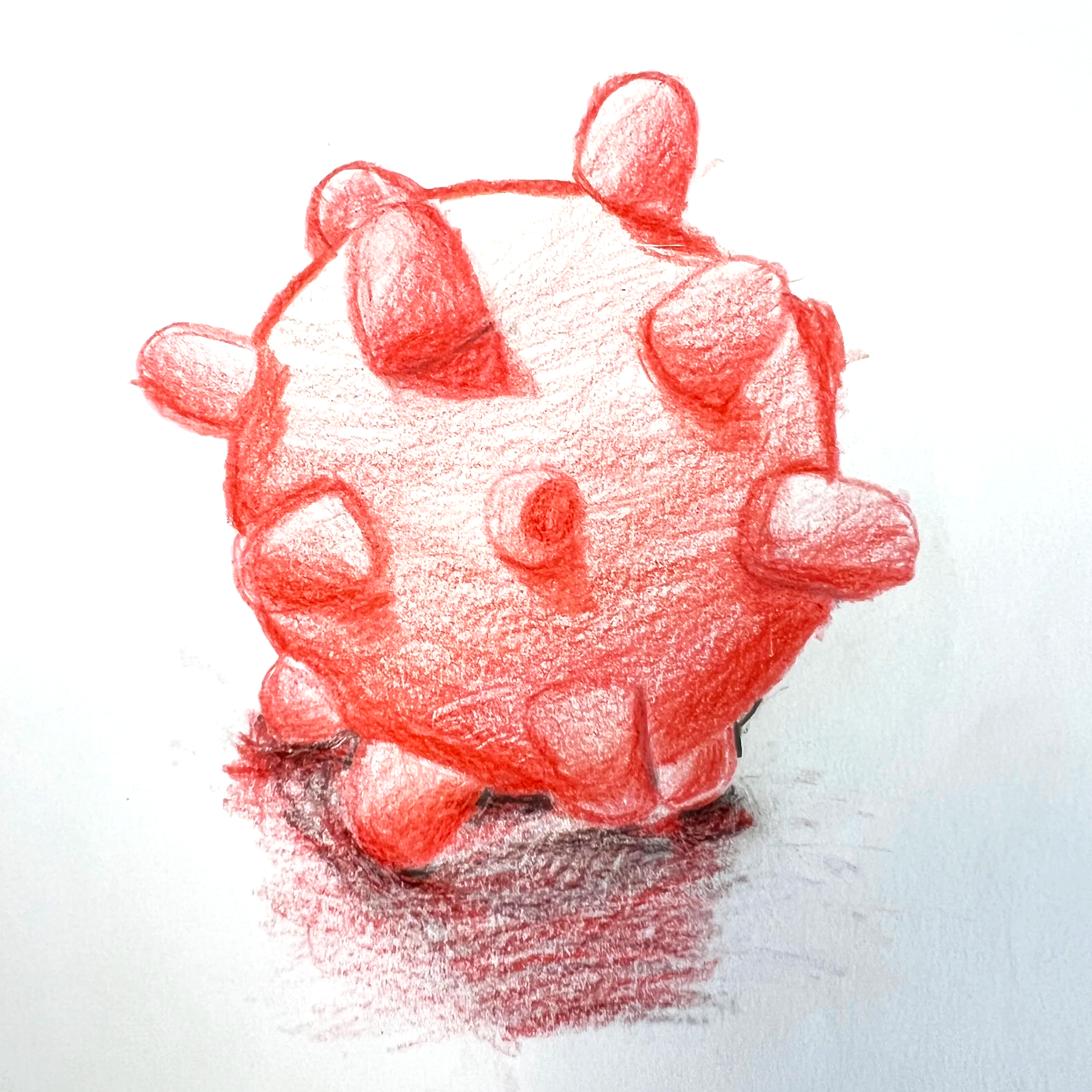
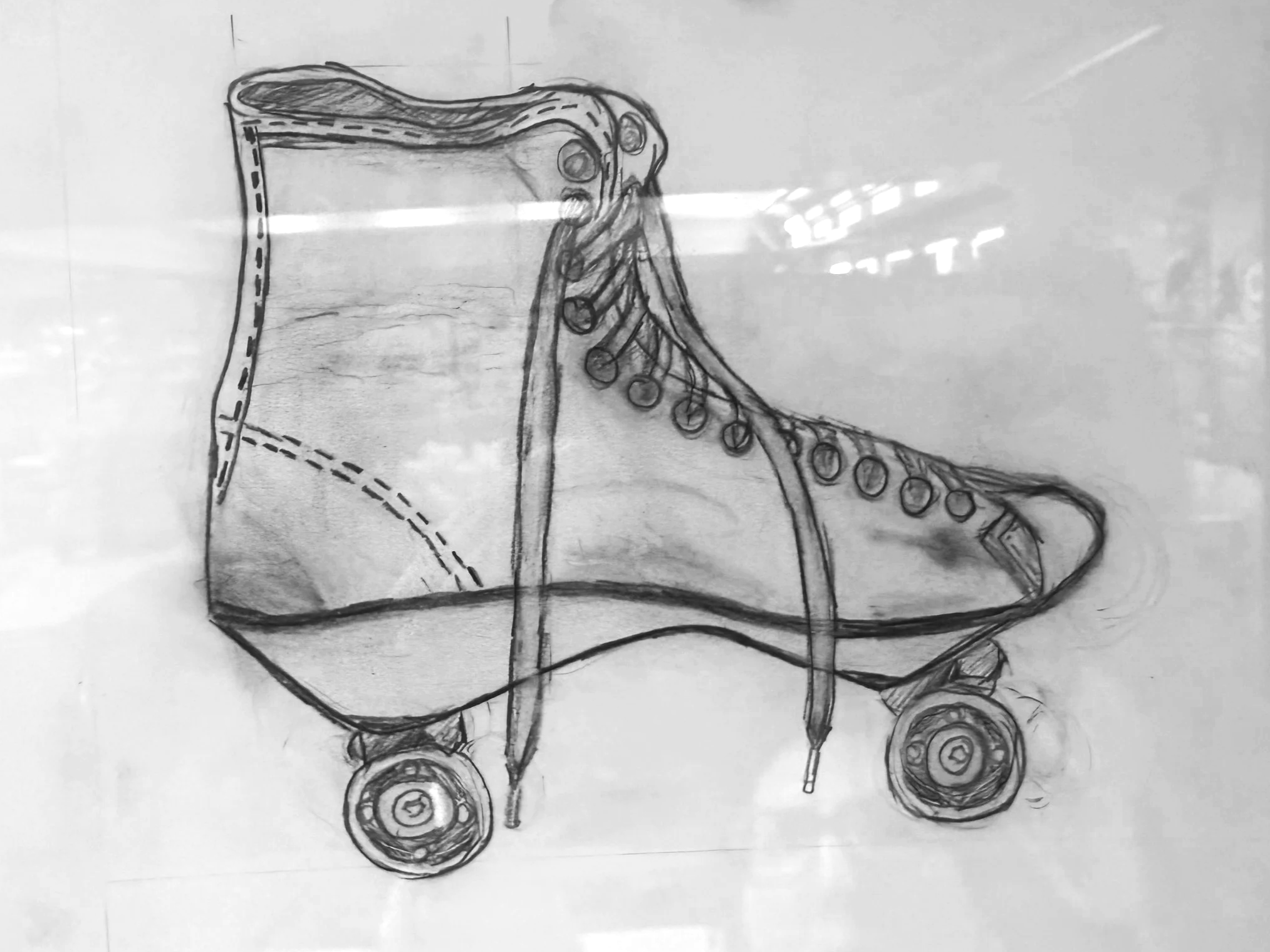
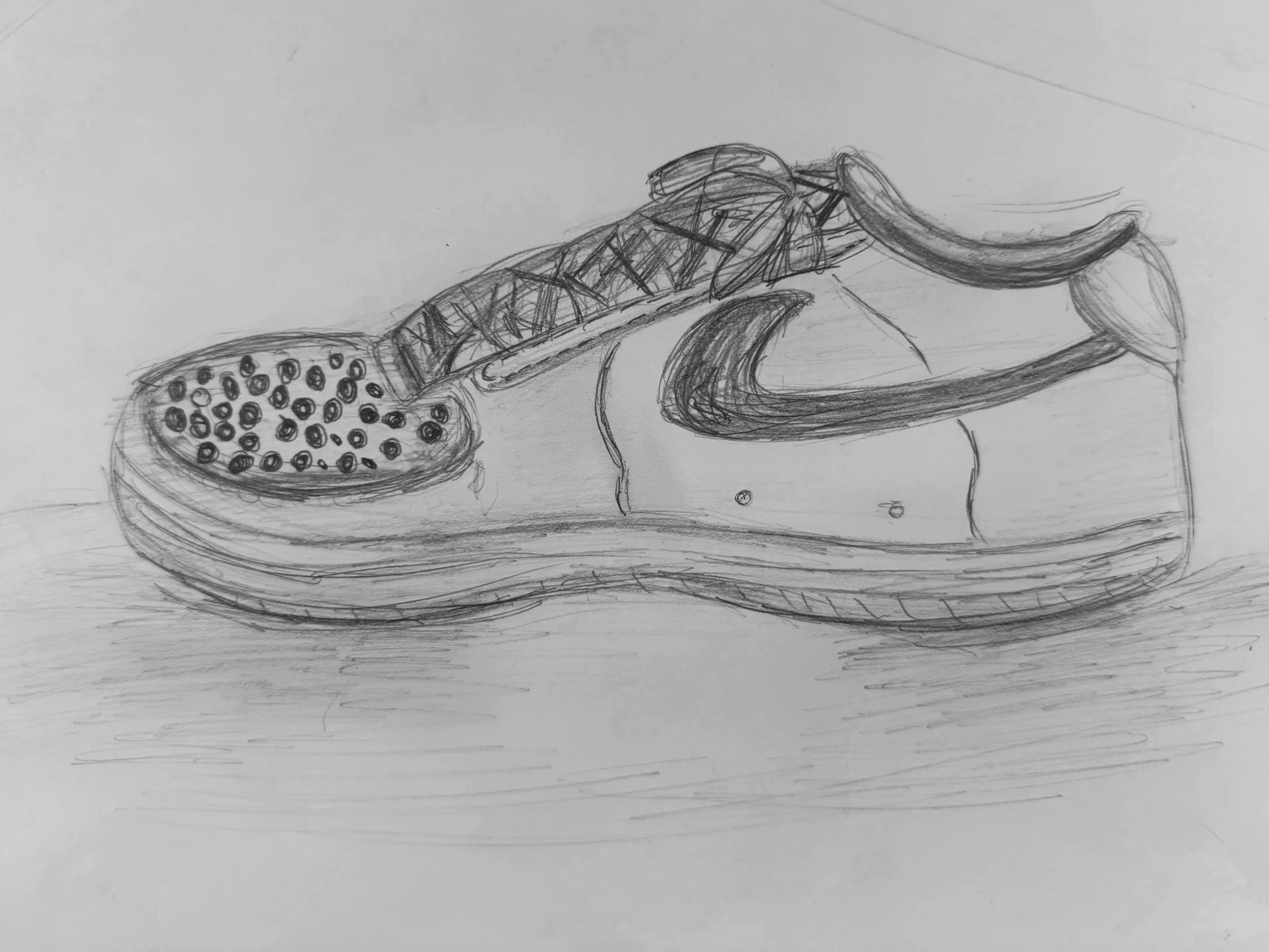
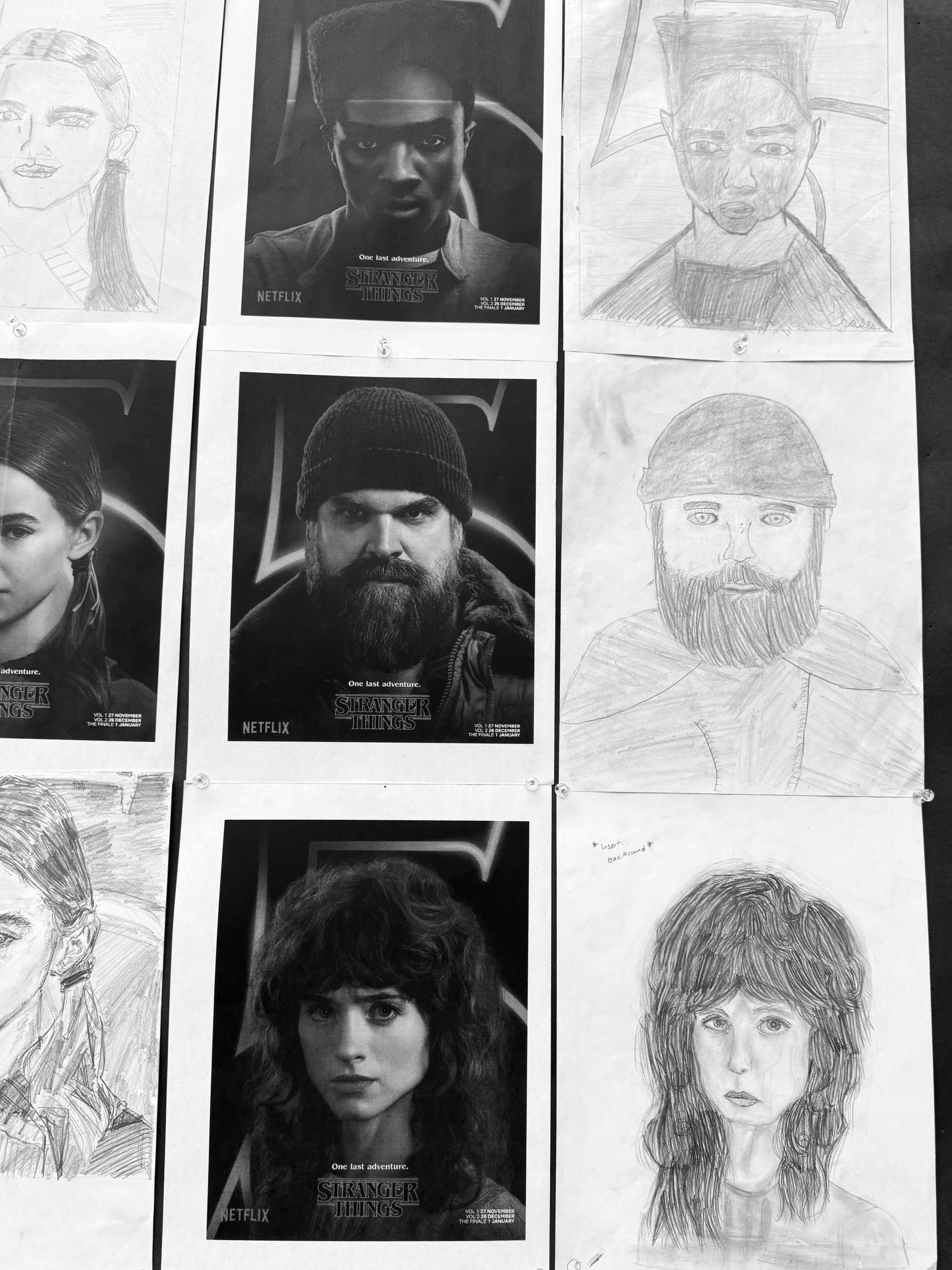
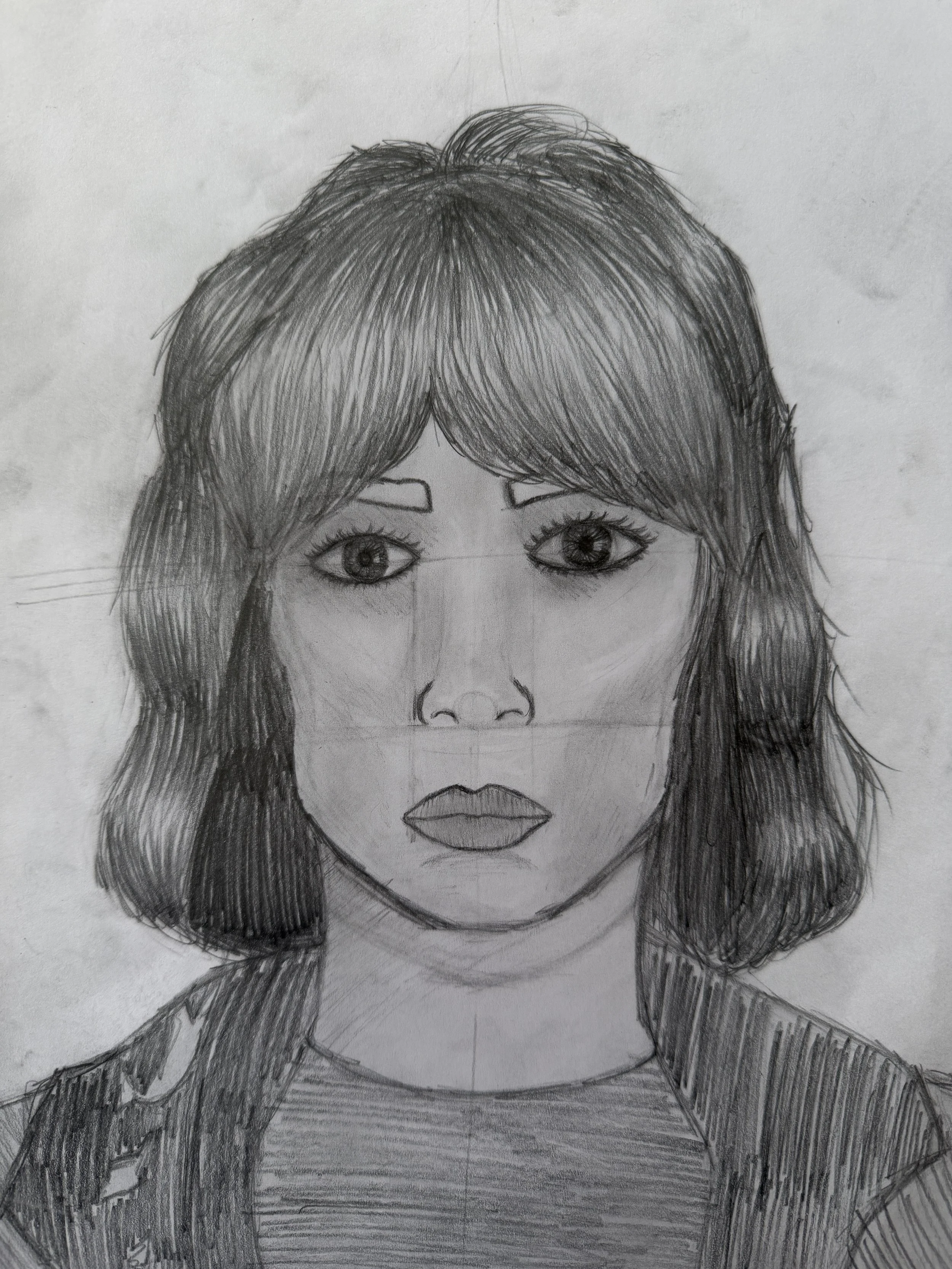
LEARNING GOAL: Students interpret three dimensional objects into two dimensional still life drawings.
PROCESS: Starting with basic shapes, students practice drawing blocks and spheres using line and shape. As students progress the objects get more complex and the focus shifts to light, value and form to texture and perspective.
OUTCOME: Students learn to see and interpret what they are seeing into their drawing. Students demonstrate use of drawing materials and techniques to create what they see.
California Visual Art Standards:2.1 Enduring Understanding Artists and designers experiment with forms, structures, materials, concepts, media, and art-making approaches. 5.VA:Cr2.1 Experiment and develop skills in multiple art-making techniques and approaches through practice. 2.2 Enduring Understanding Artists and designers balance experimentation and safety, freedom, and responsibility while developing and creating artworks. 5.VA:Cr2.2 Demonstrate quality craftsmanship through care for and use of materials, tools, and equipment.
“This is the best thing I ever drew”
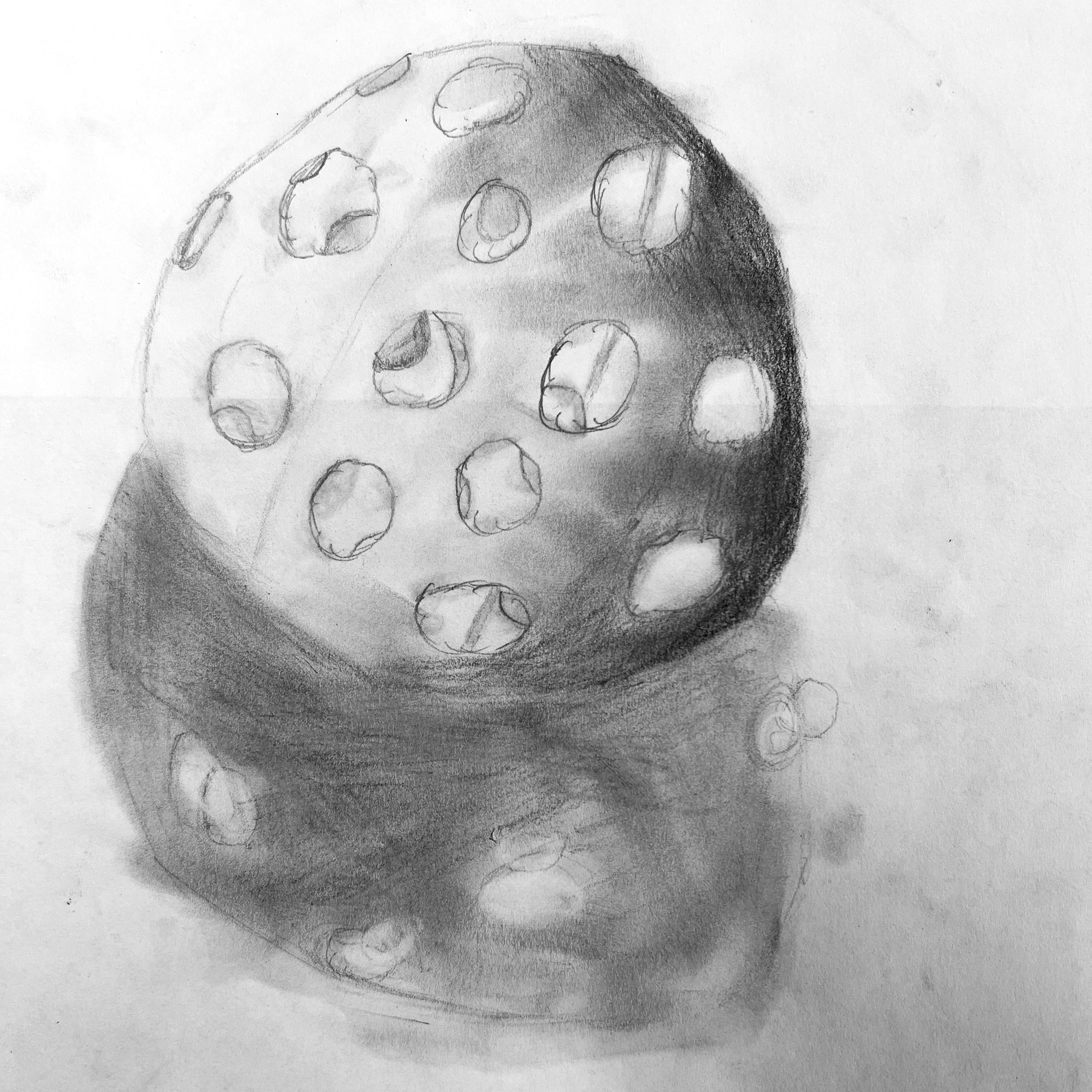
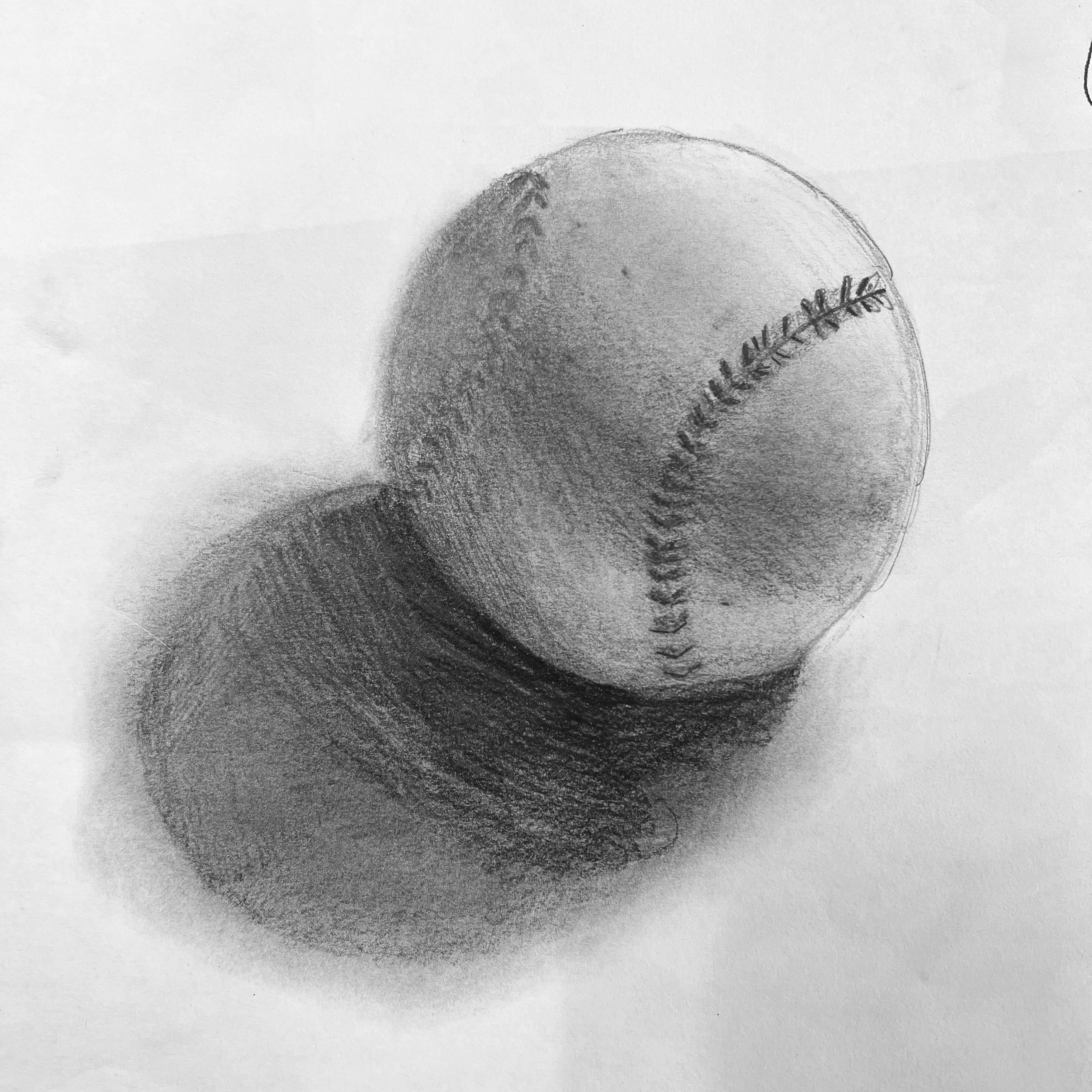
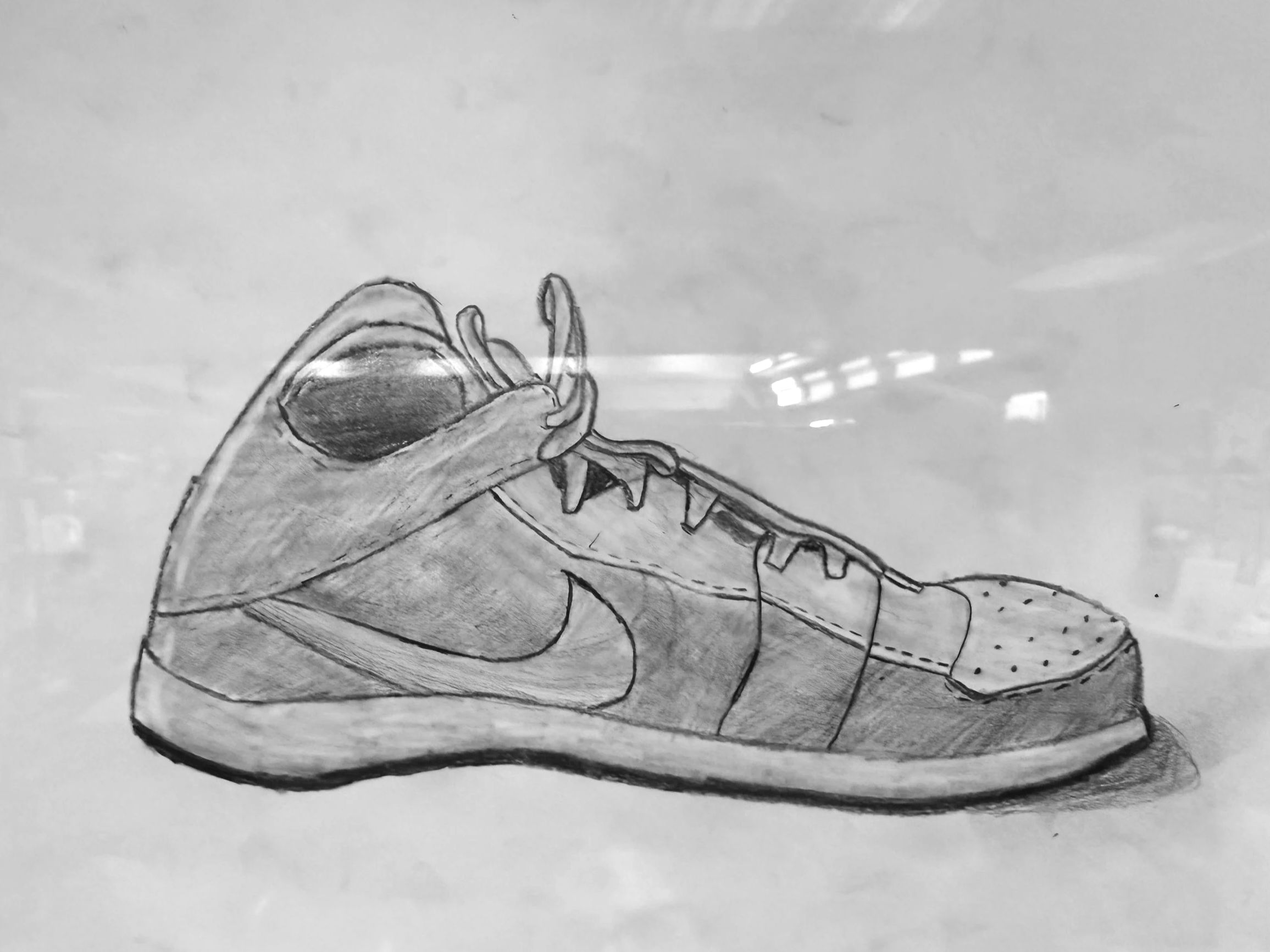
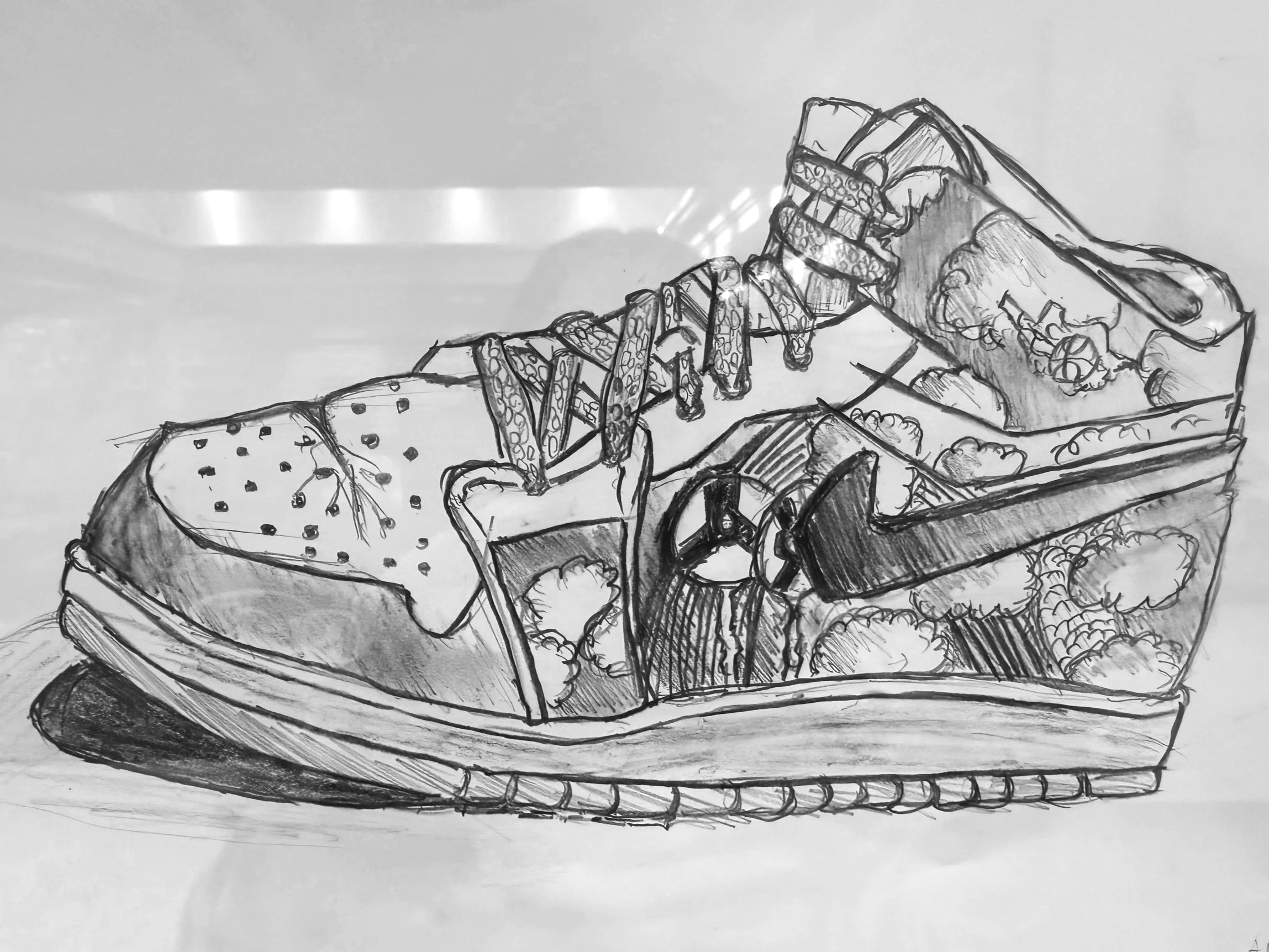
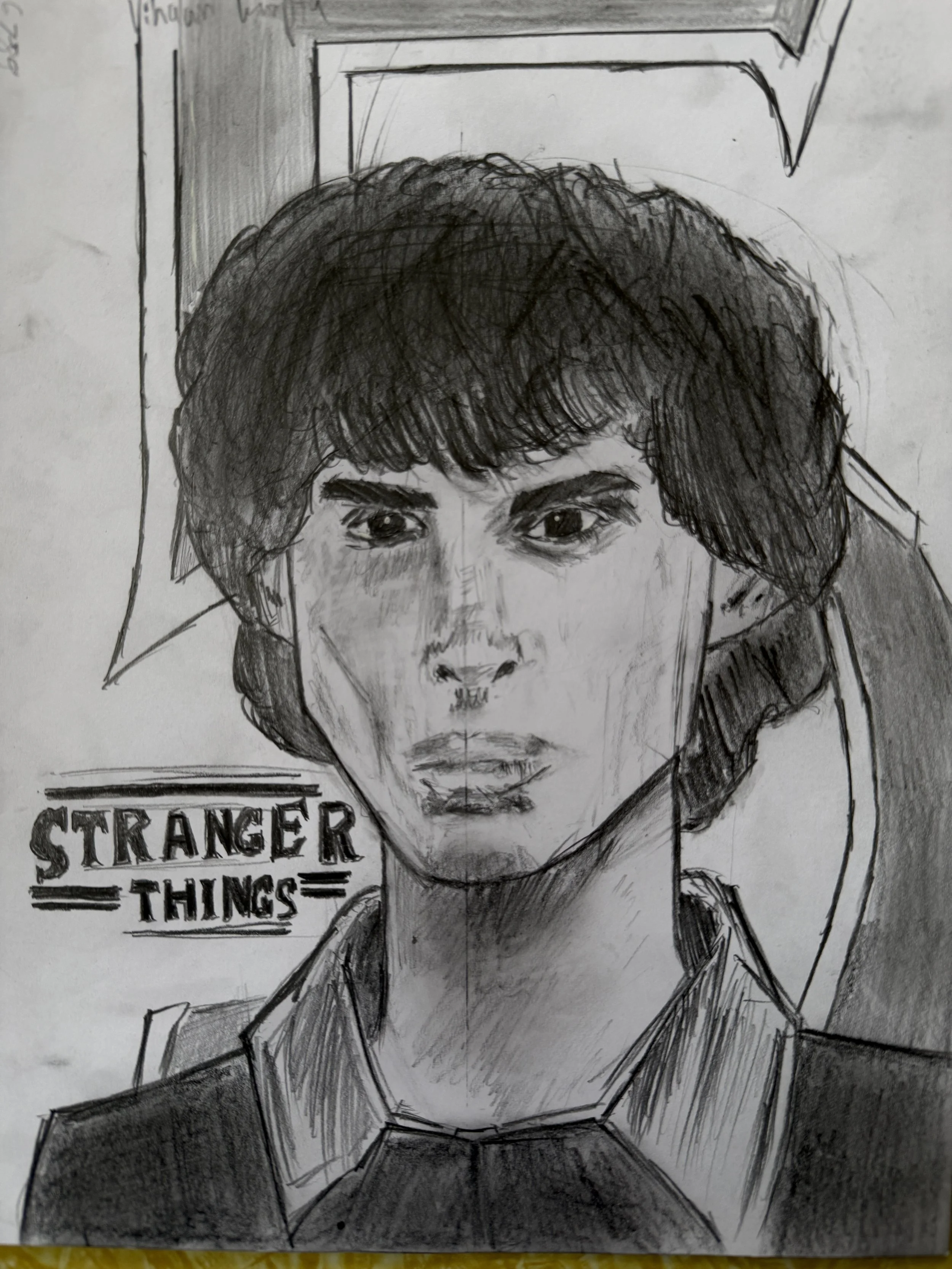
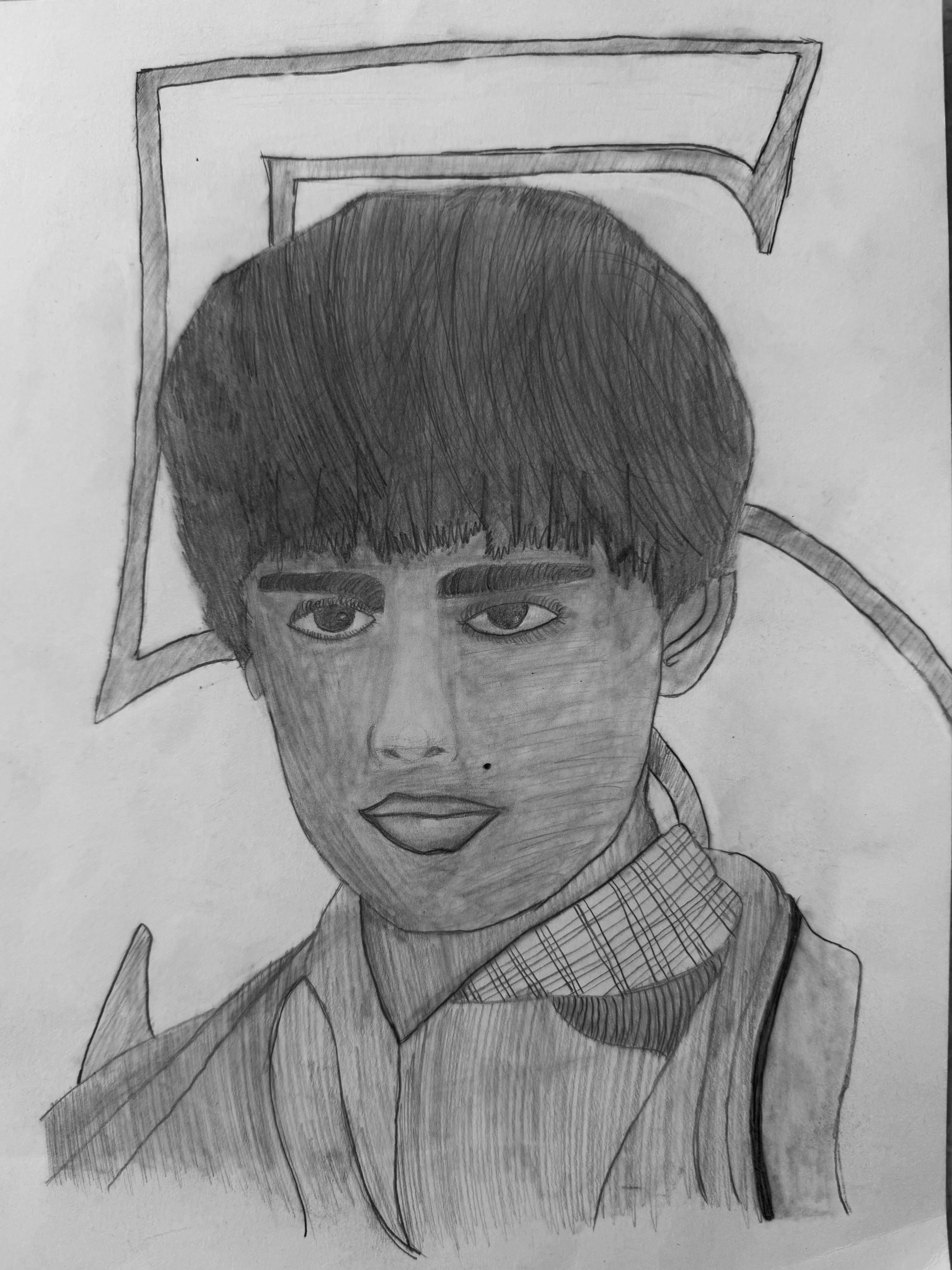
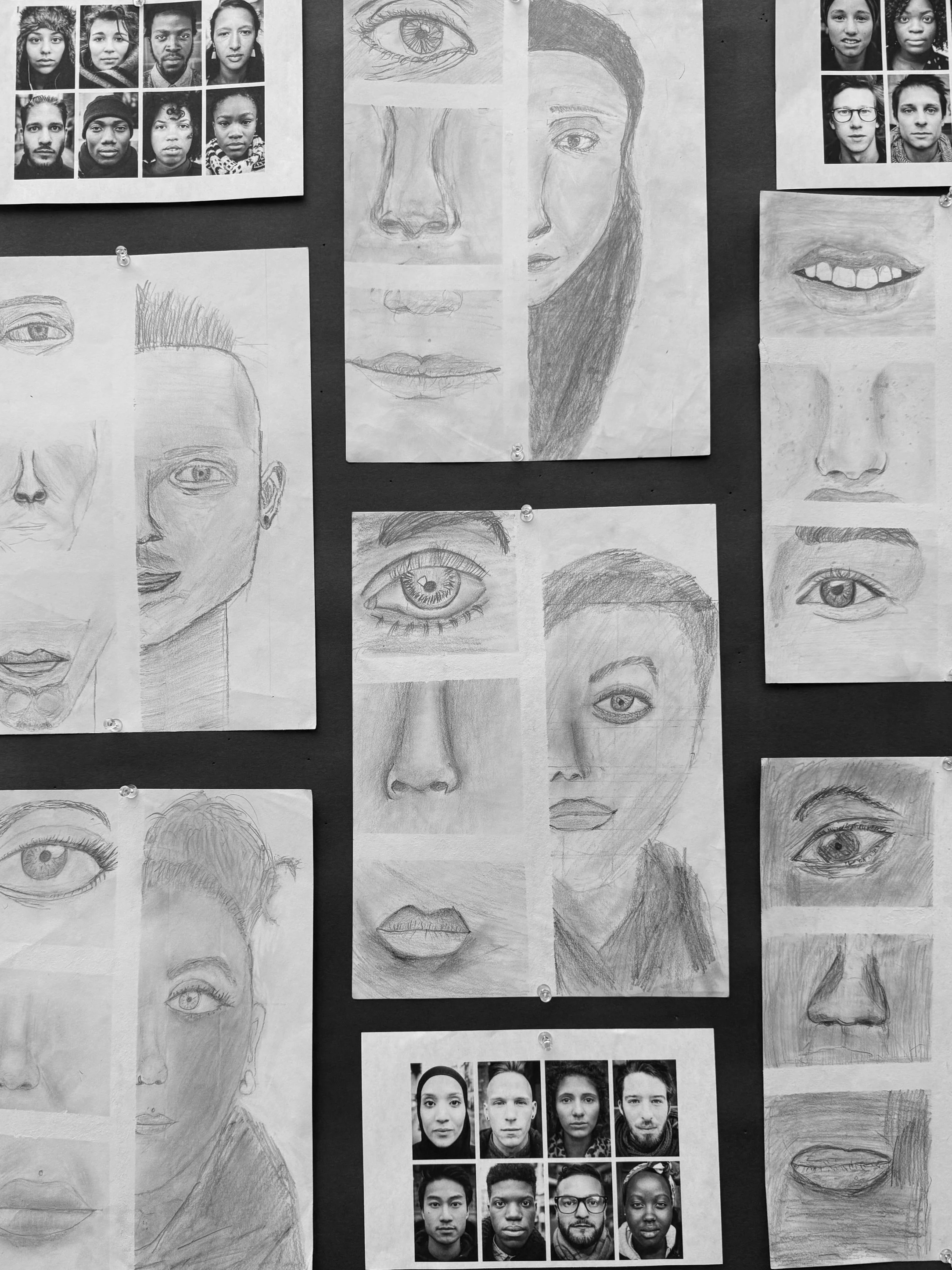
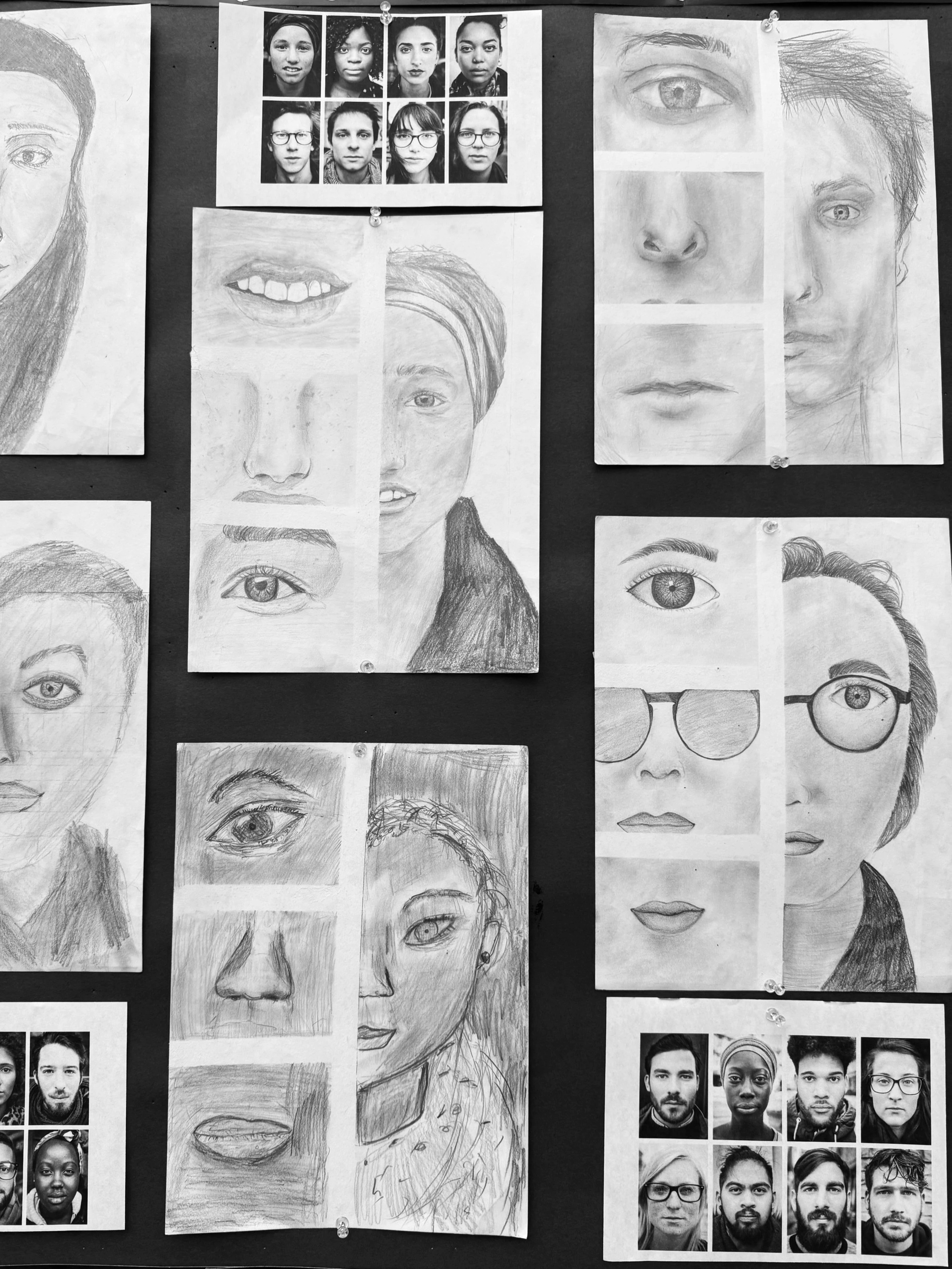
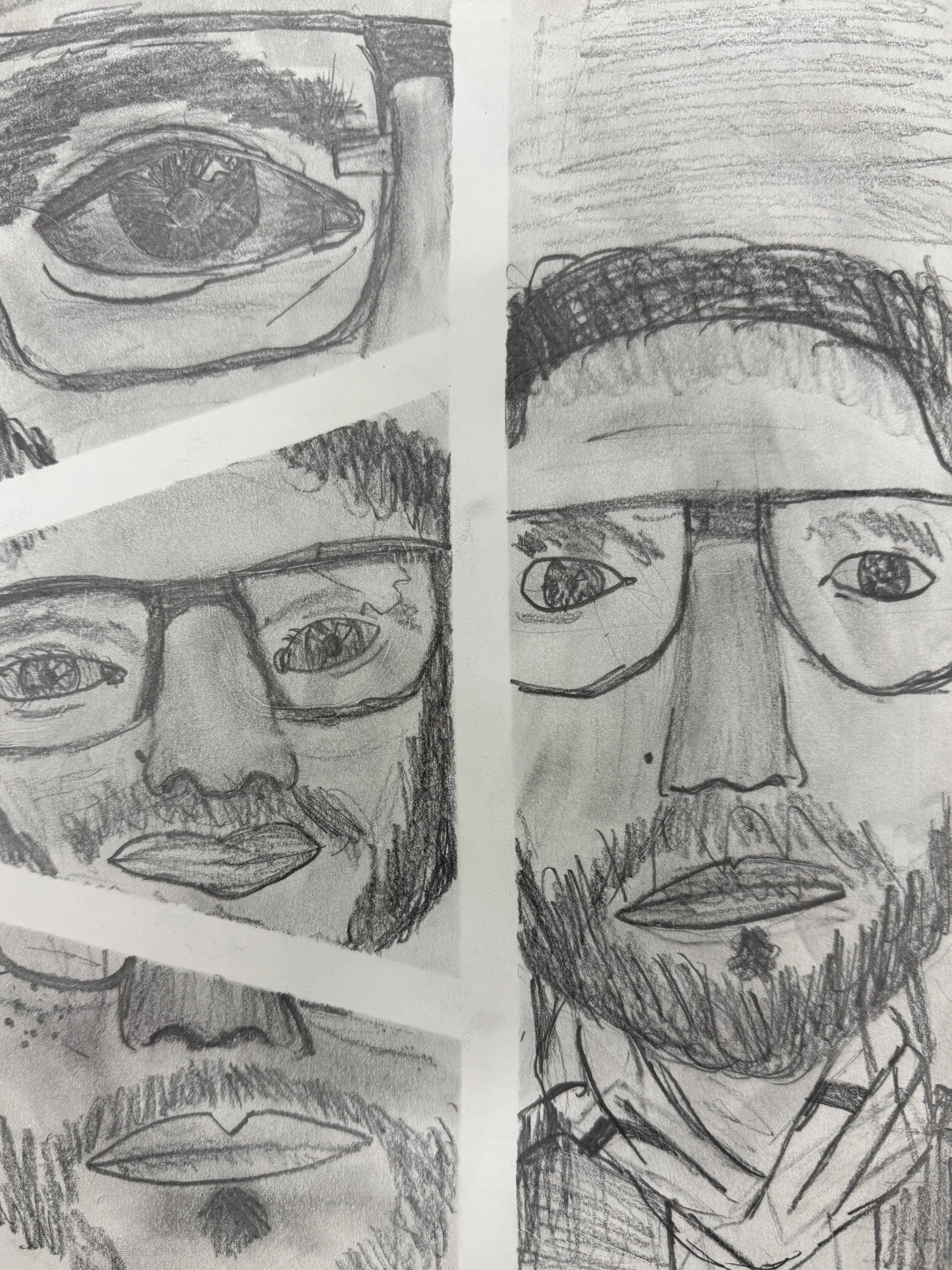
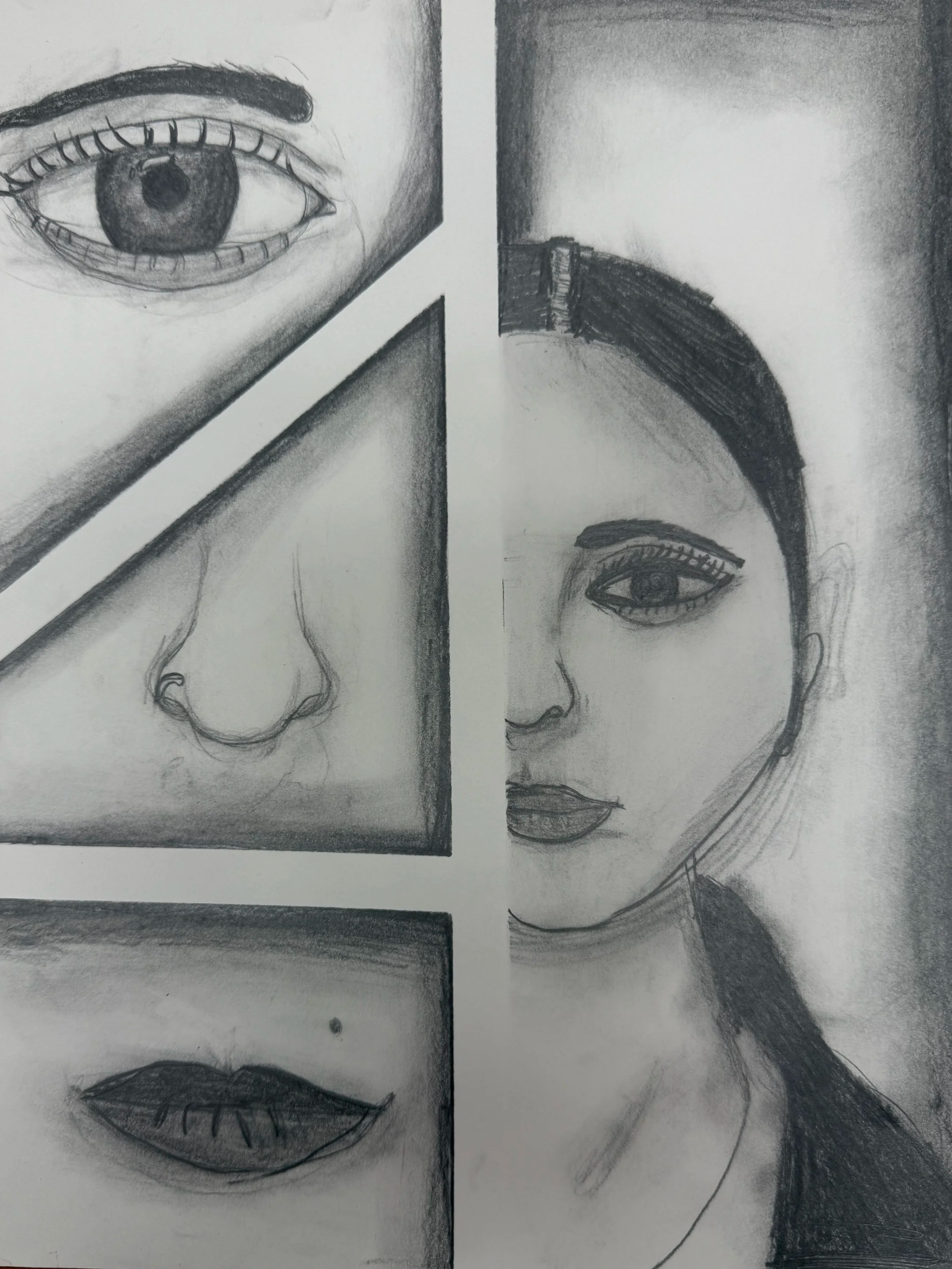
“It was hard at first, but it was a good challenge and made me better at drawing”
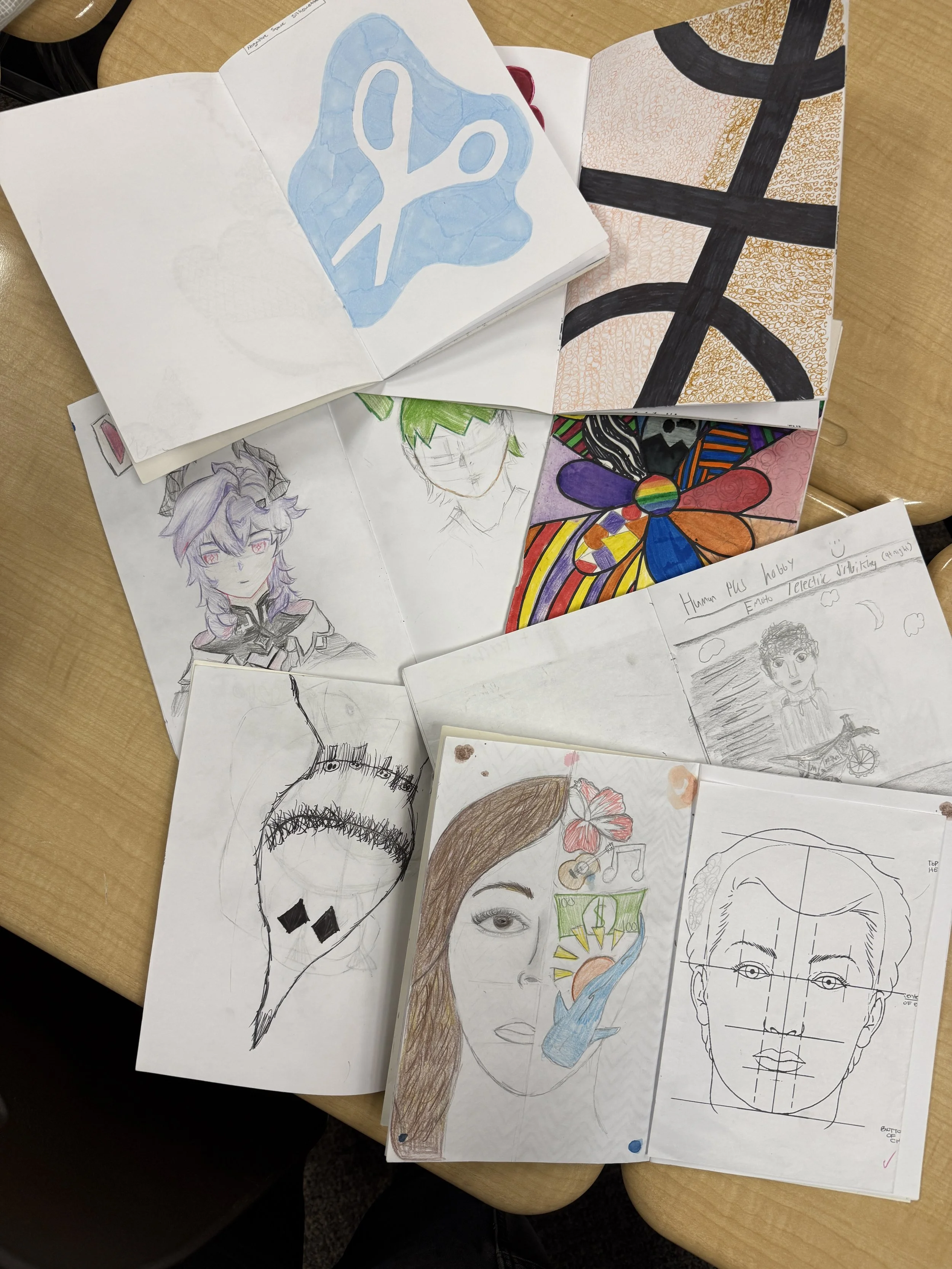
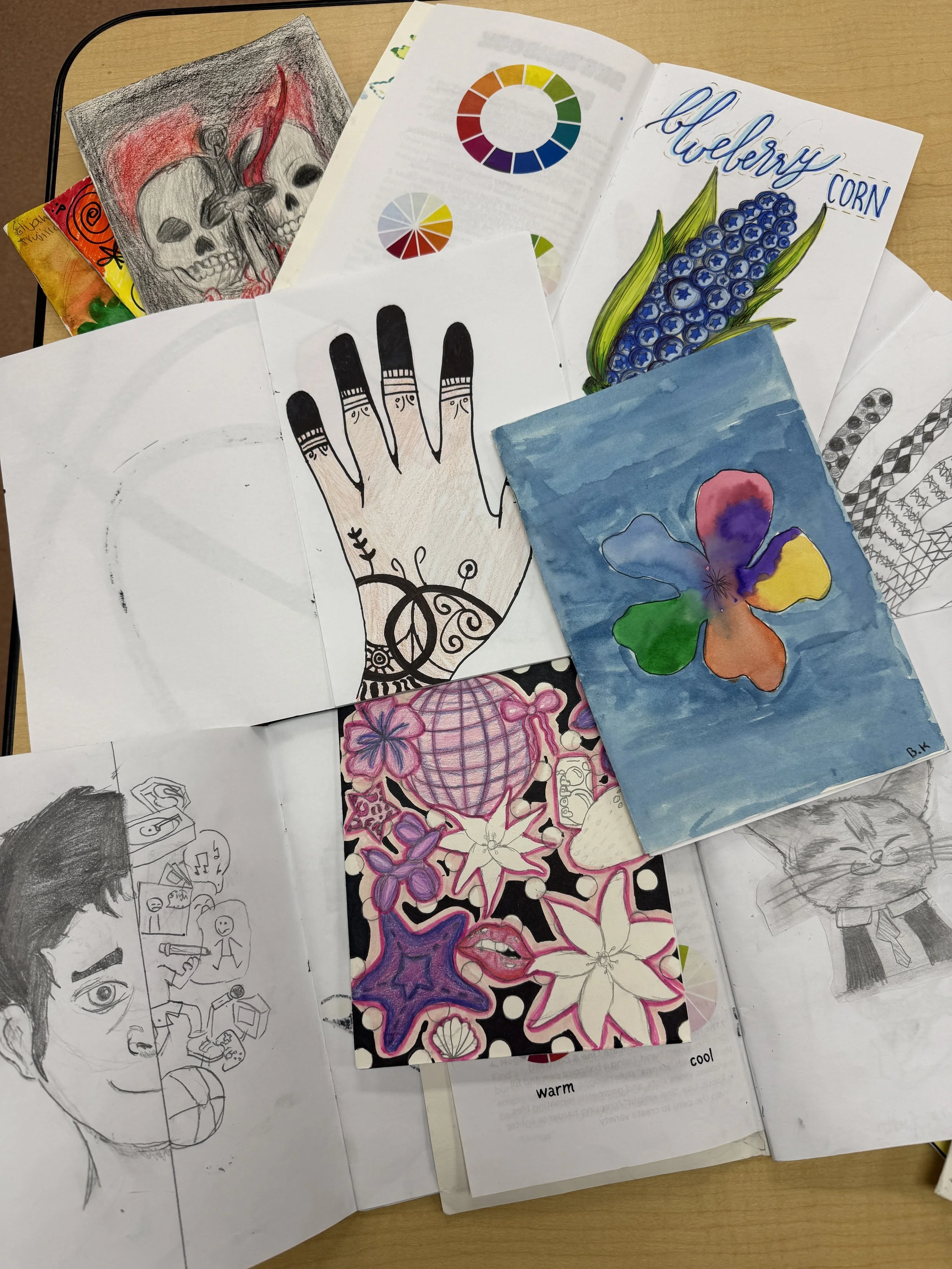
Sketchbooks
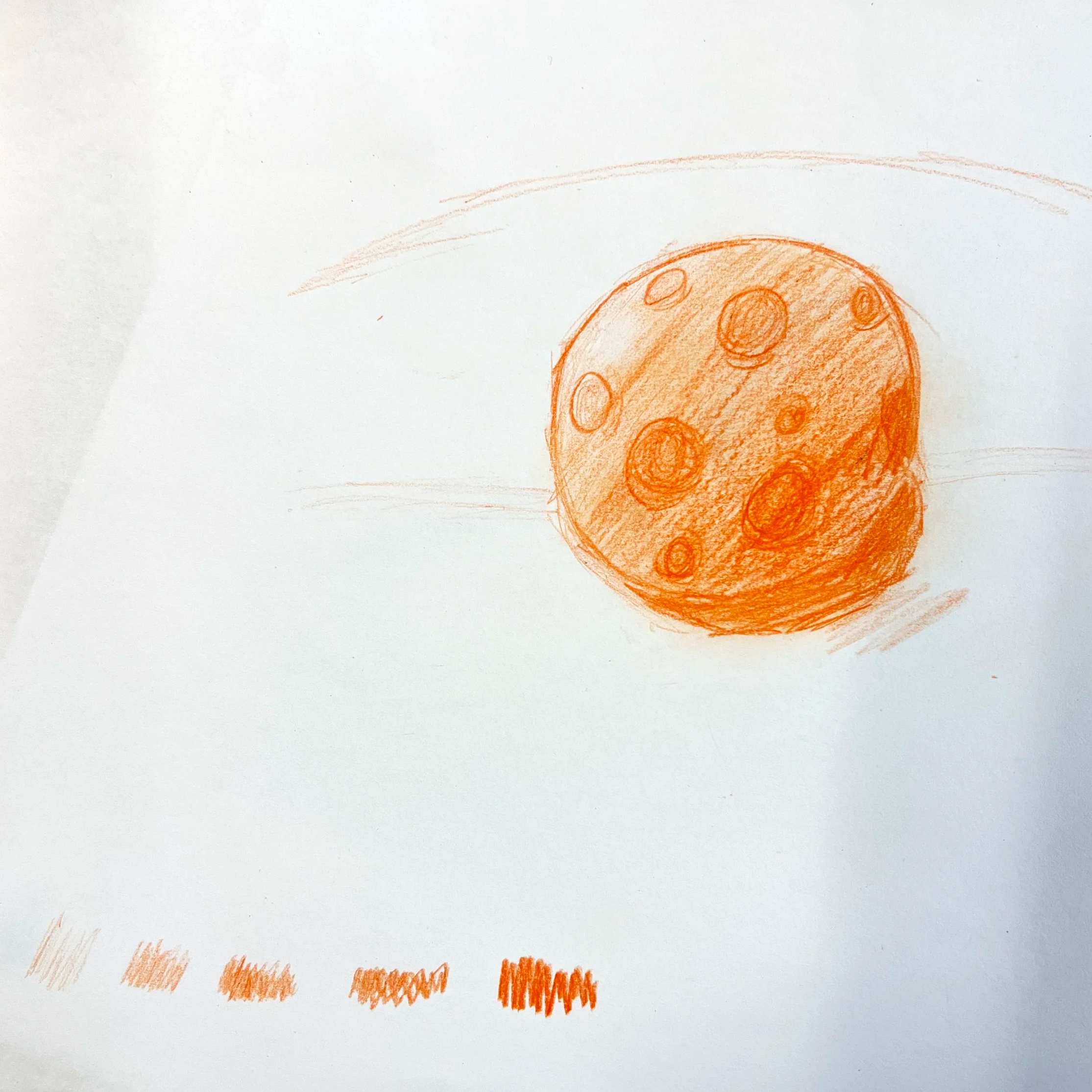
LEARNING GOAL: Students develop an independent artistic practice by maintaining a sketchbook throughout the trimester. Students explore new materials, complete creative exercises, record their artistic growth, and create original work that reflects their individual ideas and artistic voice.
PROCESS: Each student is given a sketchbook at the start of the trimester. The sketchbook includes reference exercises, such as a value scale and color wheel, along with sketchbook prompts and material suggestions that encourage creative thinking and experimentation. Students are expected to complete a required number of sketches by the end of the trimester, with regular check-ins to monitor progress, provide feedback, and encourage continuous artistic growth.
OUTCOME: Students maintain a sketchbook throughout the trimester that documents their artistic development over time. Each sketch reflects individual ideas while demonstrating developing technical skills, creative problem-solving, experimentation with materials and personal expression.
California Visual Art Standards:1.1 Enduring Understanding Creativity and innovative thinking are essential life skills that can be developed. 8.VA:Cr1.1Document early stages of the creative process visually and/or verbally in traditional or contemporary media. 7.1 Enduring Understanding Individual aesthetic and empathetic awareness developed through engagement with art can lead to understanding and appreciation of self, others, the natural world, and constructed environments. 4.VA:Re7.1 Compare responses to a work of art before and after working in similar media.
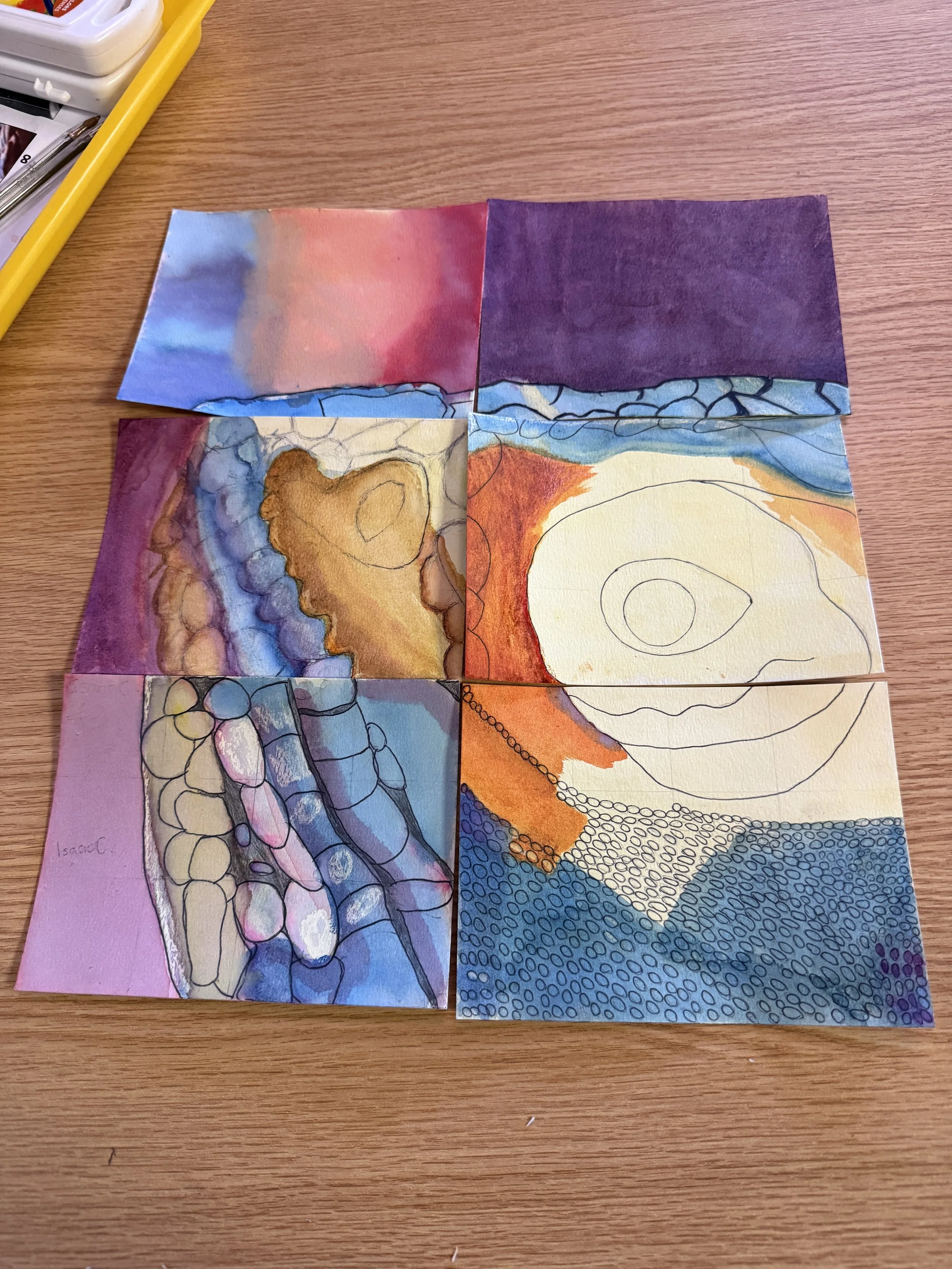
Collaborative Painting
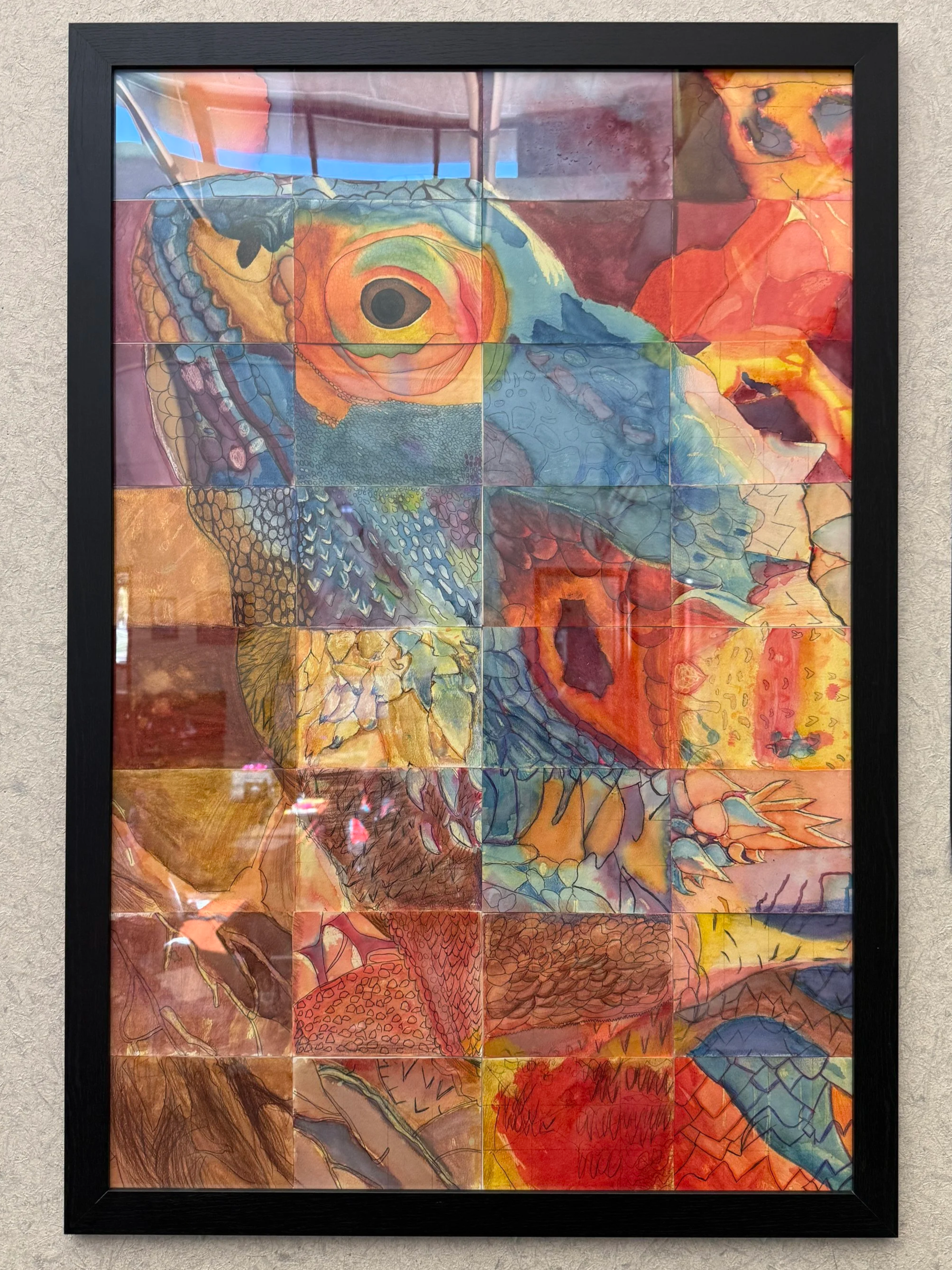
LEARNING GOAL: Students create a collaborative portrait of the classroom’s bearded dragon by using the grid technique, mixing secondary and tertiary colors, observational drawing and painting. Students worked collectively to complete a shared piece of artwork.
PROCESS: Each student is assigned a small piece to a much larger picture of the classroom’s bearded dragon. Students start by making observations and interpreting them through line, shape and pattern. Each student is then given a curated watercolor palette that challenges them to mix the colors they observe. As the class moves through the process, students check in with neighboring classmates to make sure pieces are fitting together. As students finish up their individual pieces the class puts together the final image adding details and making small color adjustments to the completed portrait.
OUTCOME: Students work together and depend on each other to create and assemble 32 pieces of a portrait using the grid technique. They apply basic color theory knowledge to get a spectrum of colors from a palette of 3 primary colors. Students learn to communicate, solve real-time problems and apply foundations to a finished collaborative artwork.
“I didn’t think this would work, but it did...and it looks so cool!”
California Visual Art Standards: 2.3 Enduring Understanding People create and interact with objects, places, and design, and this defines, shapes, enhances, and empowers their lives. Individually or collaboratively construct representations, diagrams, or maps of places that are part of everyday life. 3.VA:Cr2.3 Individually or collaboratively construct representations, diagrams, or maps of places that are part of everyday life. Connecting—Anchor Standard 10: Synthesize and Relate Knowledge and Personal Experiences to Make Art. Enduring Understanding: Through artmaking, people make meaning by investigating and developing awareness of perceptions, knowledge, and experiences. 8.VA:Cn10Make art collaboratively to reflect on and reinforce positive aspects of group identity.