3-5: Curiosity through ExplorationThis section features work from a Reggio-inspired preschool with an emergent curriculum focused on whole-child development, child-led, inquiry-based learning and exploration through materials.
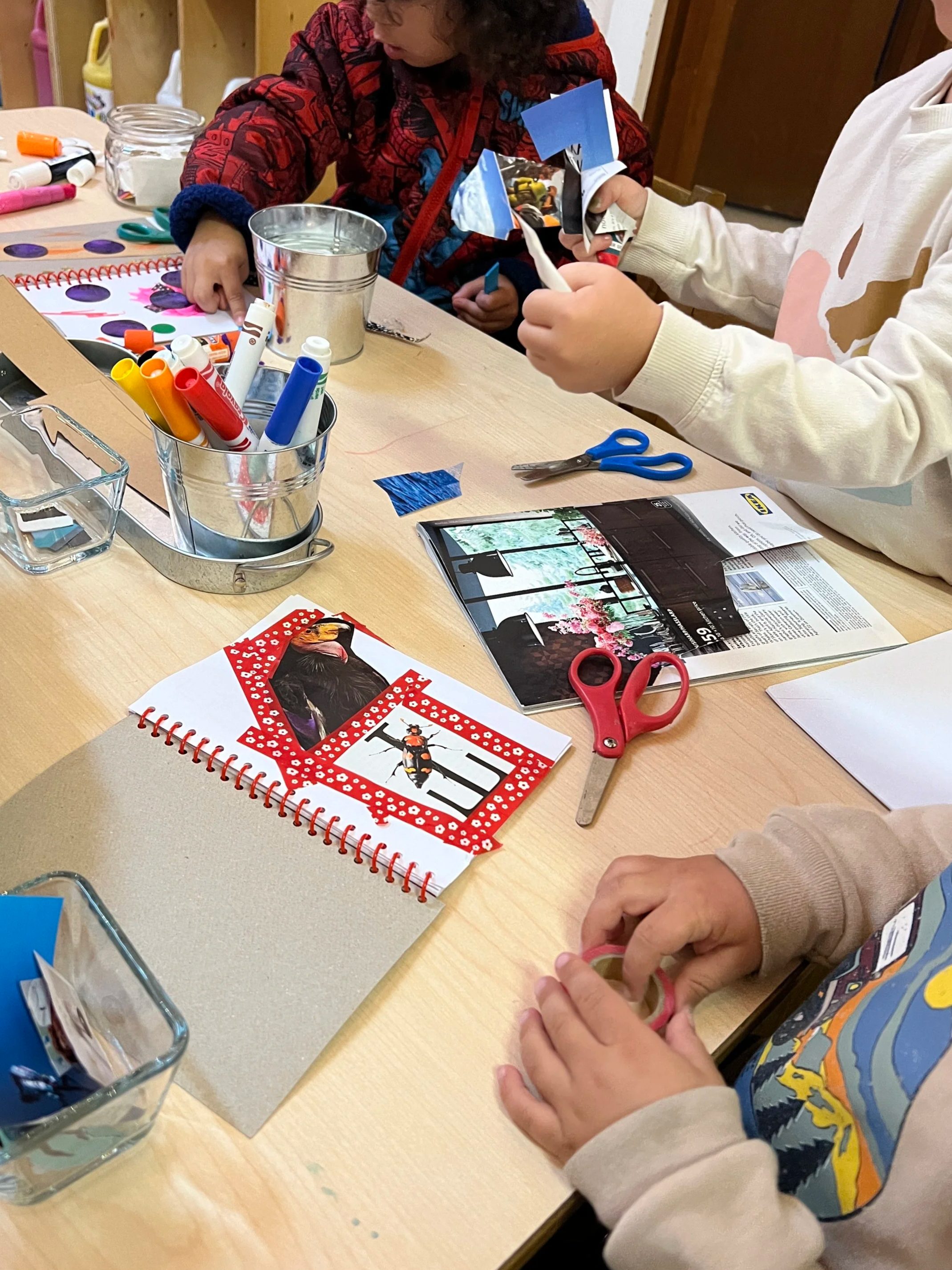
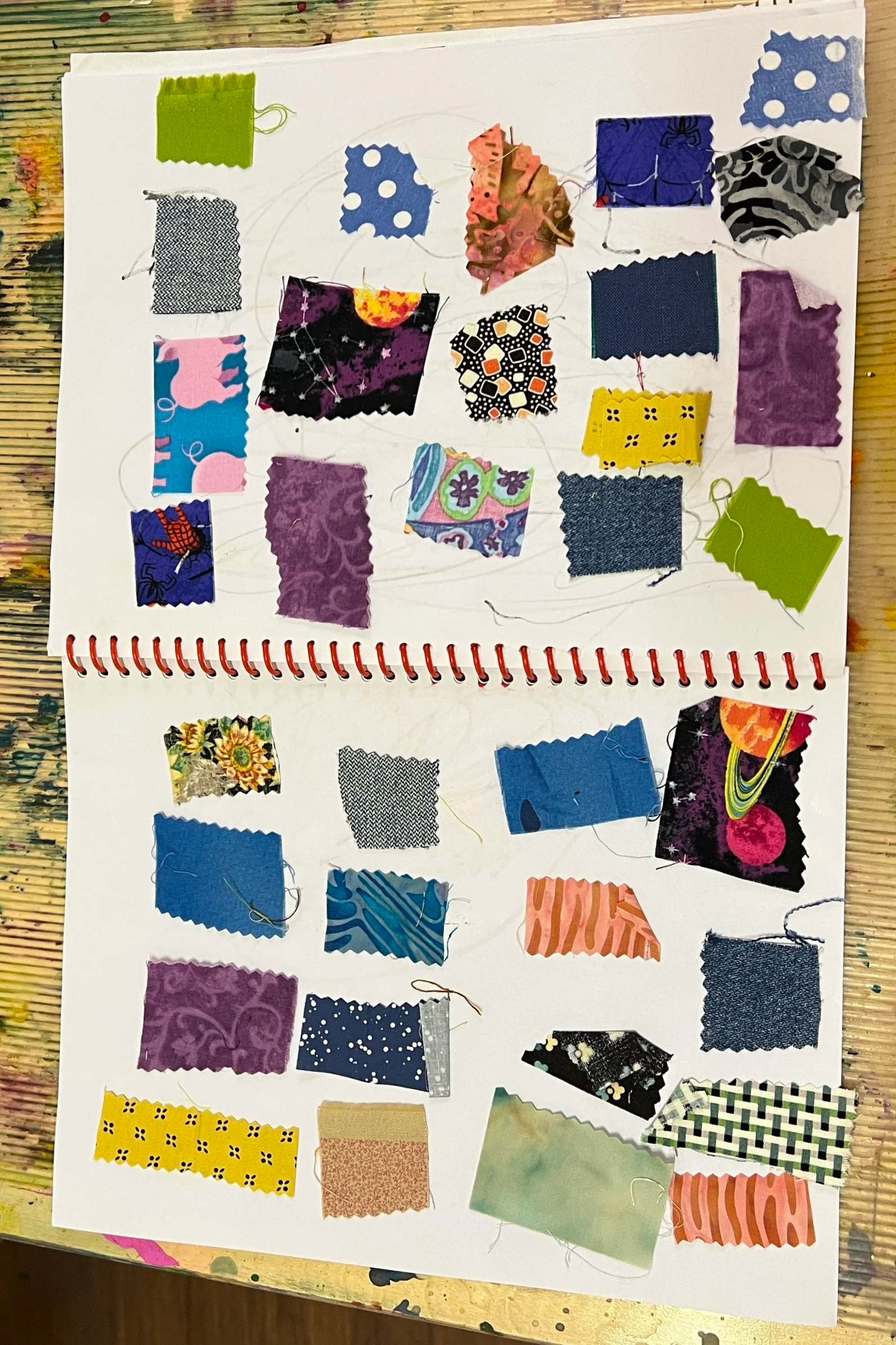
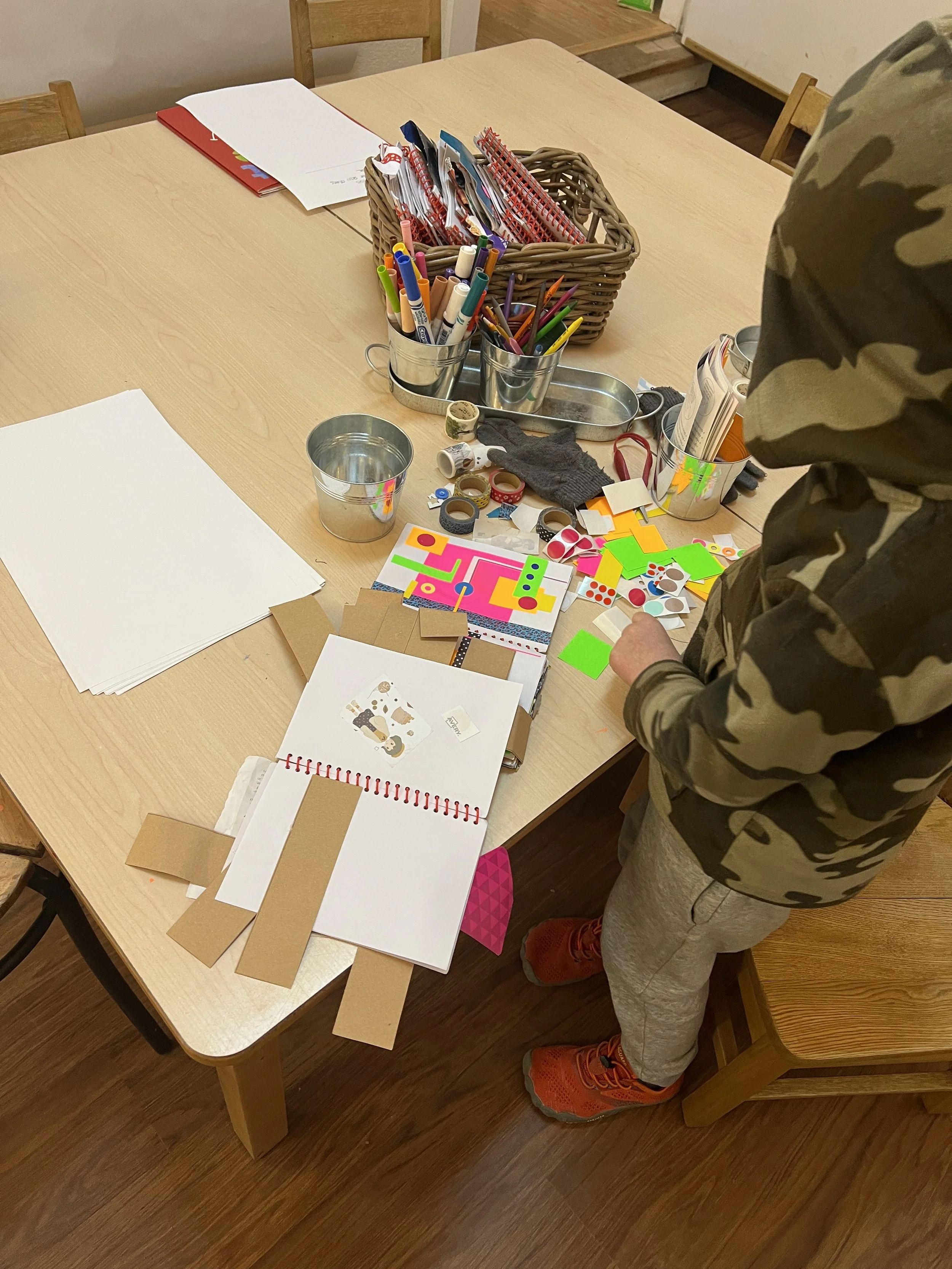
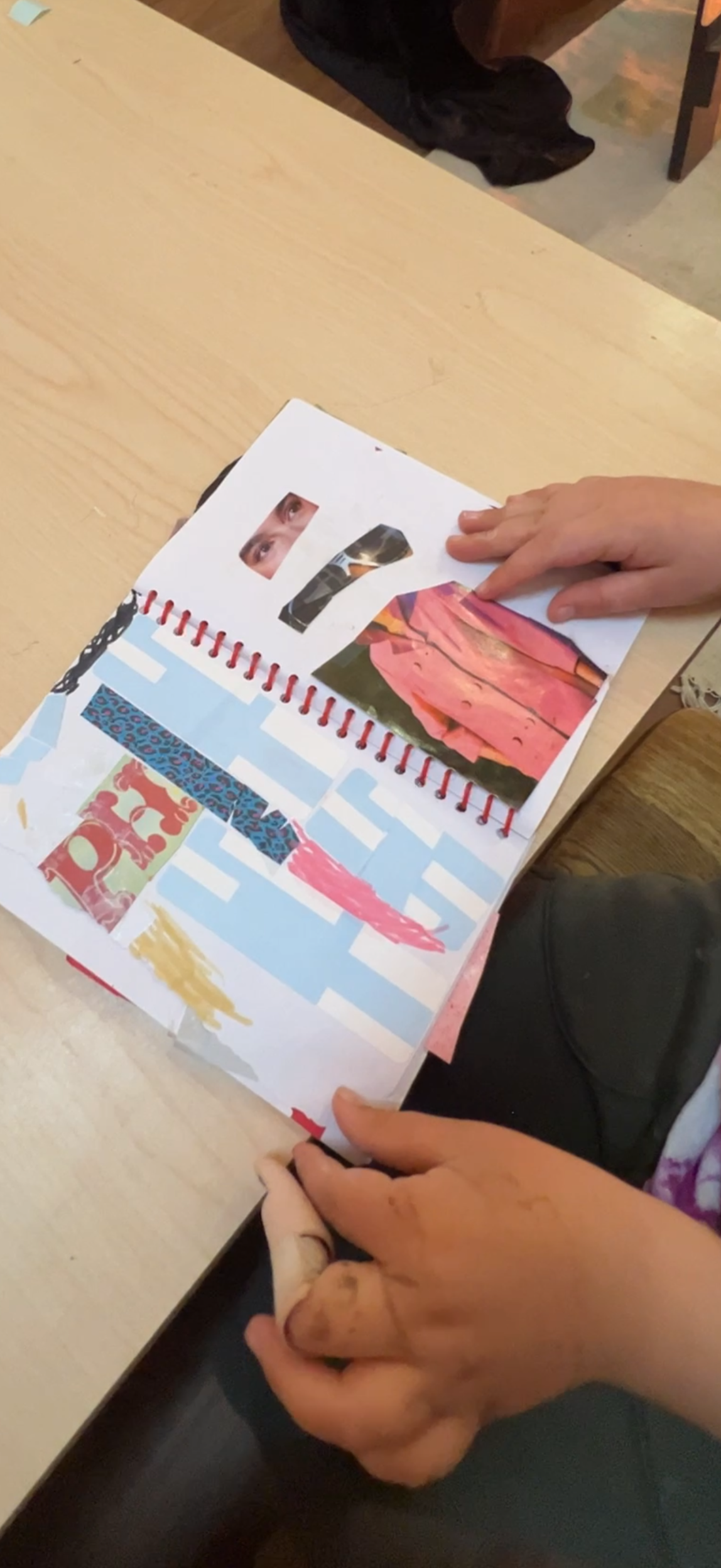
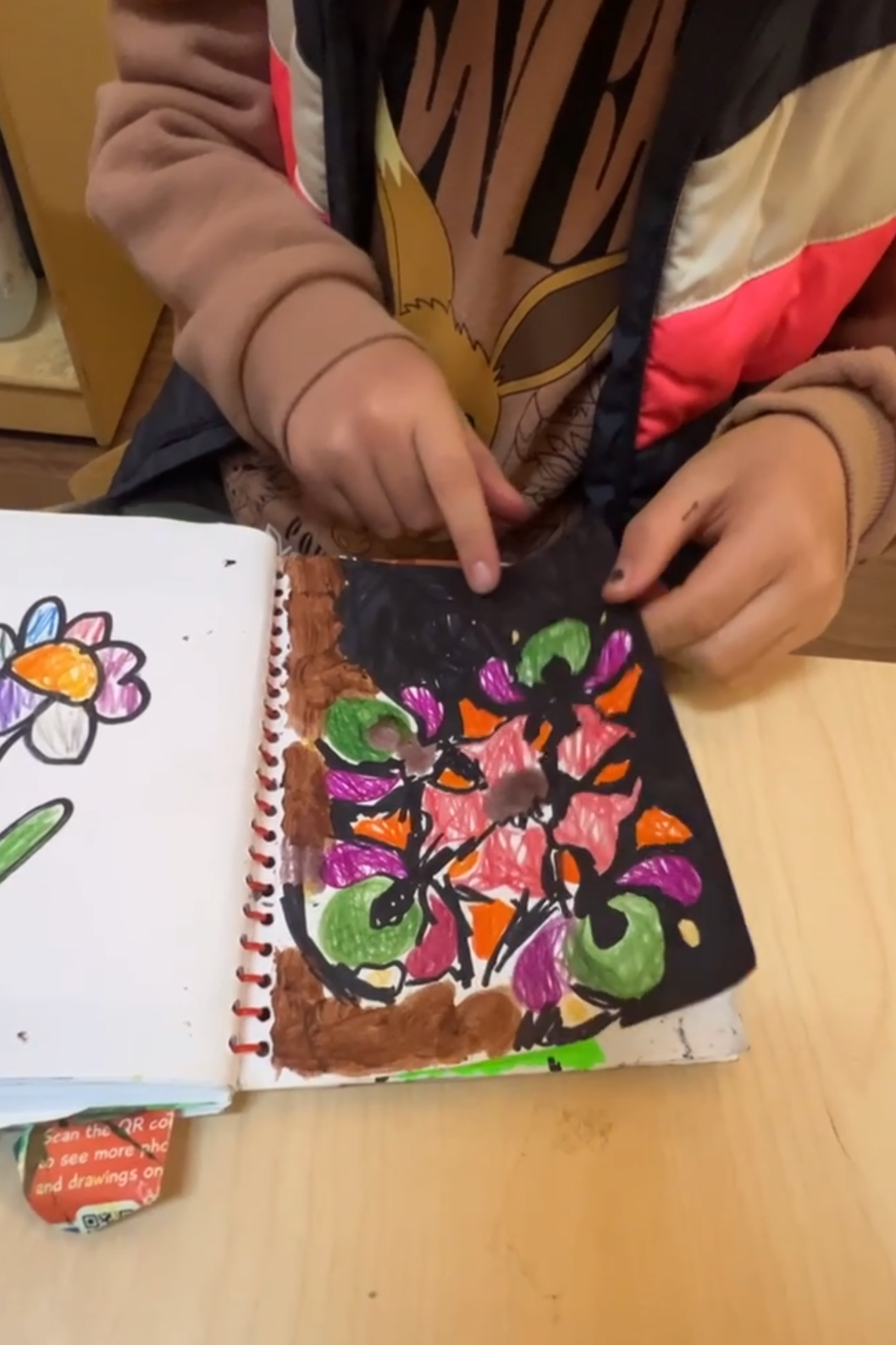
A Studio Habit: Art Journaling
Learning Goal: An ongoing creative practice where children continue to work in one journal over time, deciding when a page is complete while developing confidence in expressing their own ideas.
Process: Over the course of a school year, children had access to their art journals independently, through an ongoing invitation. Children decided when a page was complete before beginning another. Once a journal was complete, children chose a few pages to share during big group gatherings with other children and teachers, often answering questions about their work.
Outcome: Children find their creative voice through self-expression and storytelling. Children develop fine motor and language skills. Children gain creative confidence in their decision-making. With each independent session, children reflect on their creations as they flip through the pages to find their place. The journals become a natural documentation of each child's learning and thinking over time.
“I started this yesterday, and I just finished it today”
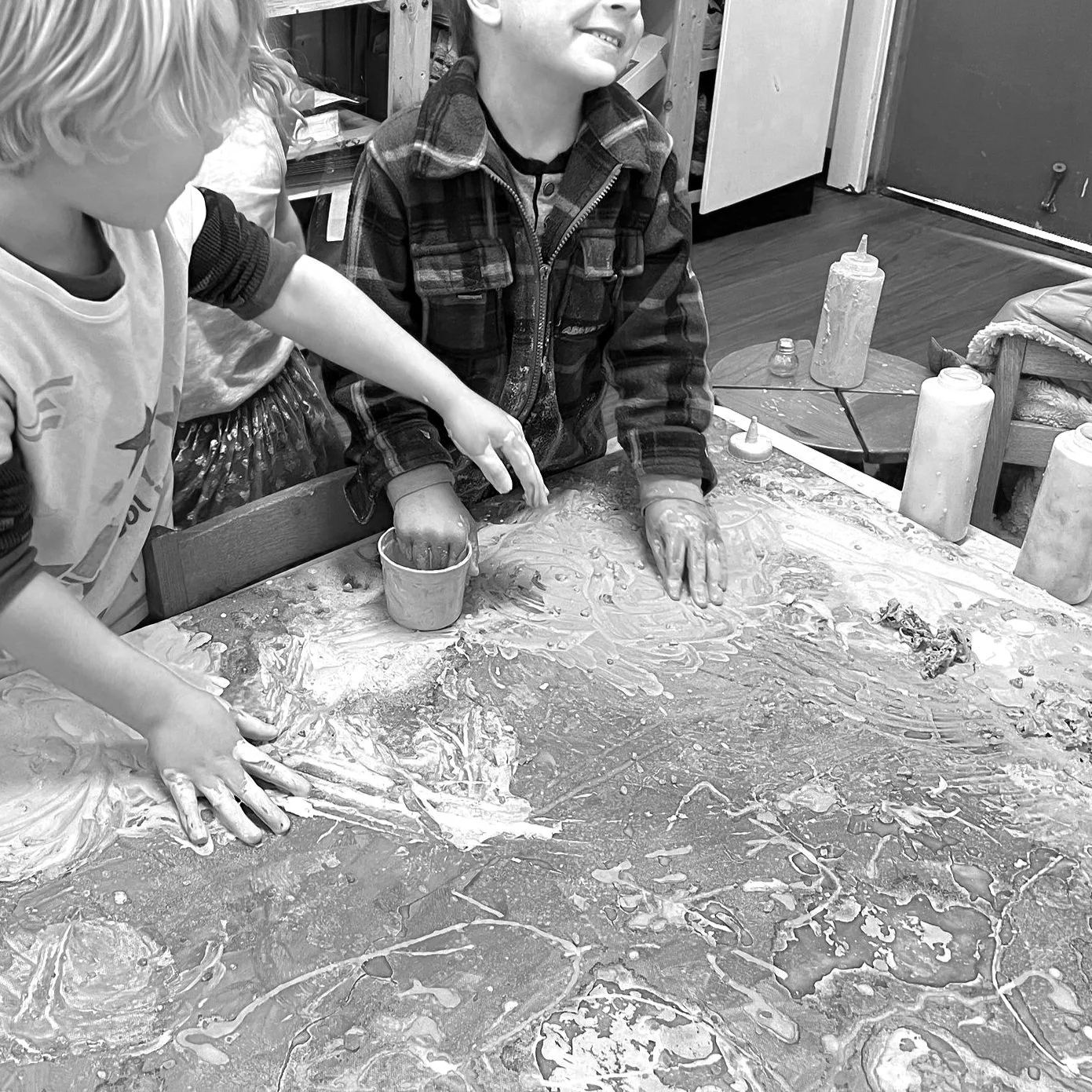


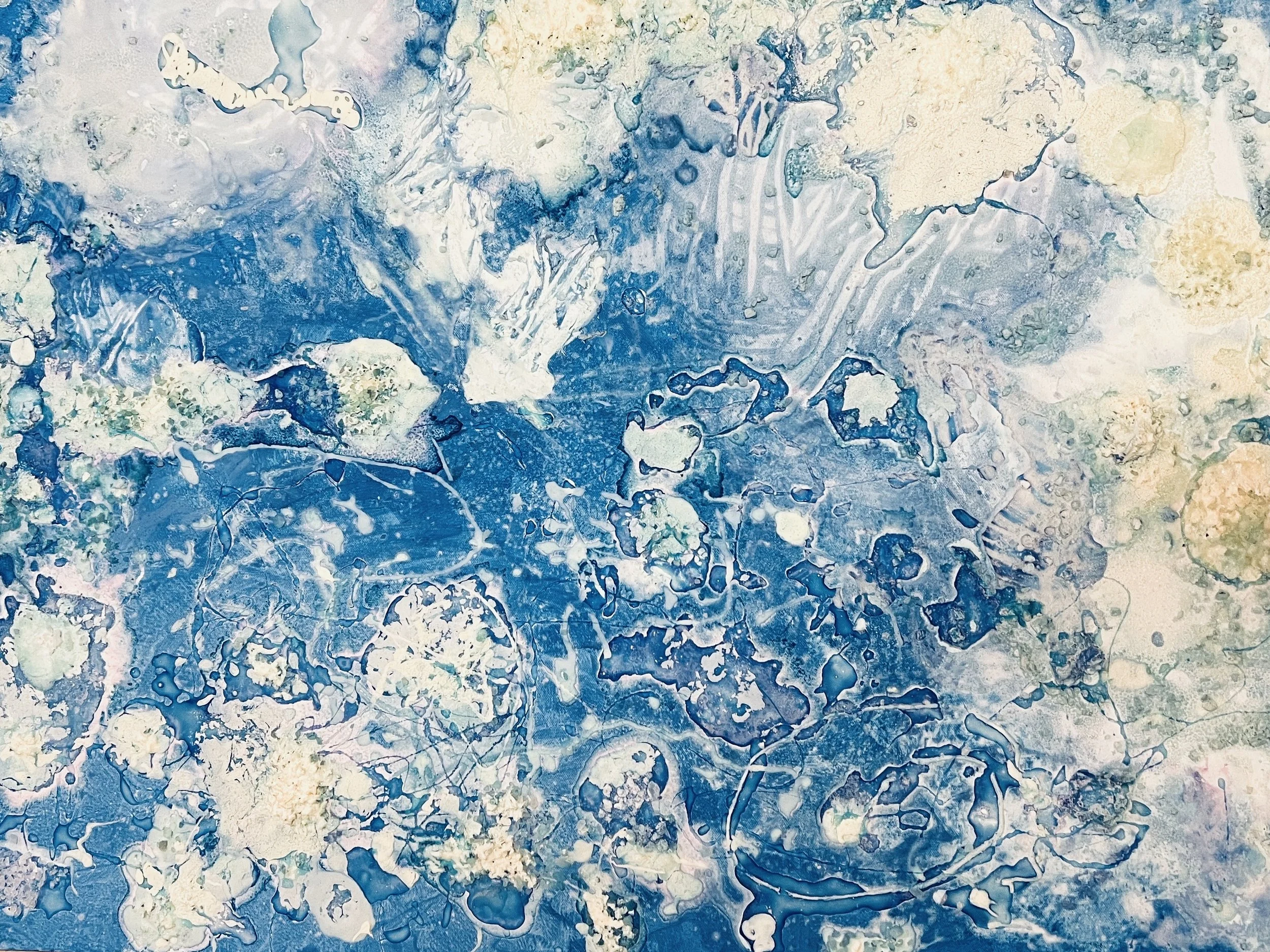
Material Exploration: A World of Blue
Learning Goal: To explore the properties of watercolor, glue, salt, and paint through open-ended investigation while observing how materials change over time and can be used to create, tell stories, and express ideas.
Process: Children begin by exploring watercolor through a series of invitations. As their investigations deepen, new materials, including salt, clear glue, white paint, and shaving cream, are intentionally introduced to encourage new discoveries and ways of working.
The investigation gradually expands from small individual canvases to a large collaborative canvas chosen by the children. As they revisit the work over several weeks, children continue adding layers of glue, paint, and salt while others begin peeling away dried layers to create "slime" before reattaching them with more glue. The artwork evolves through repeated experimentation, observation, collaboration, and storytelling. Through these experiences, children create stories of roads, rivers, snow, and ice while observing how the materials mix, dry, change, and transform over time.
Outcome: Children build understanding through exploration, play, and storytelling while developing language, social-emotional skills, creative thinking, and scientific observation. By revisiting the investigation over time, they discover how materials change, generate new ideas, and collaborate to create an artwork that continually evolves.
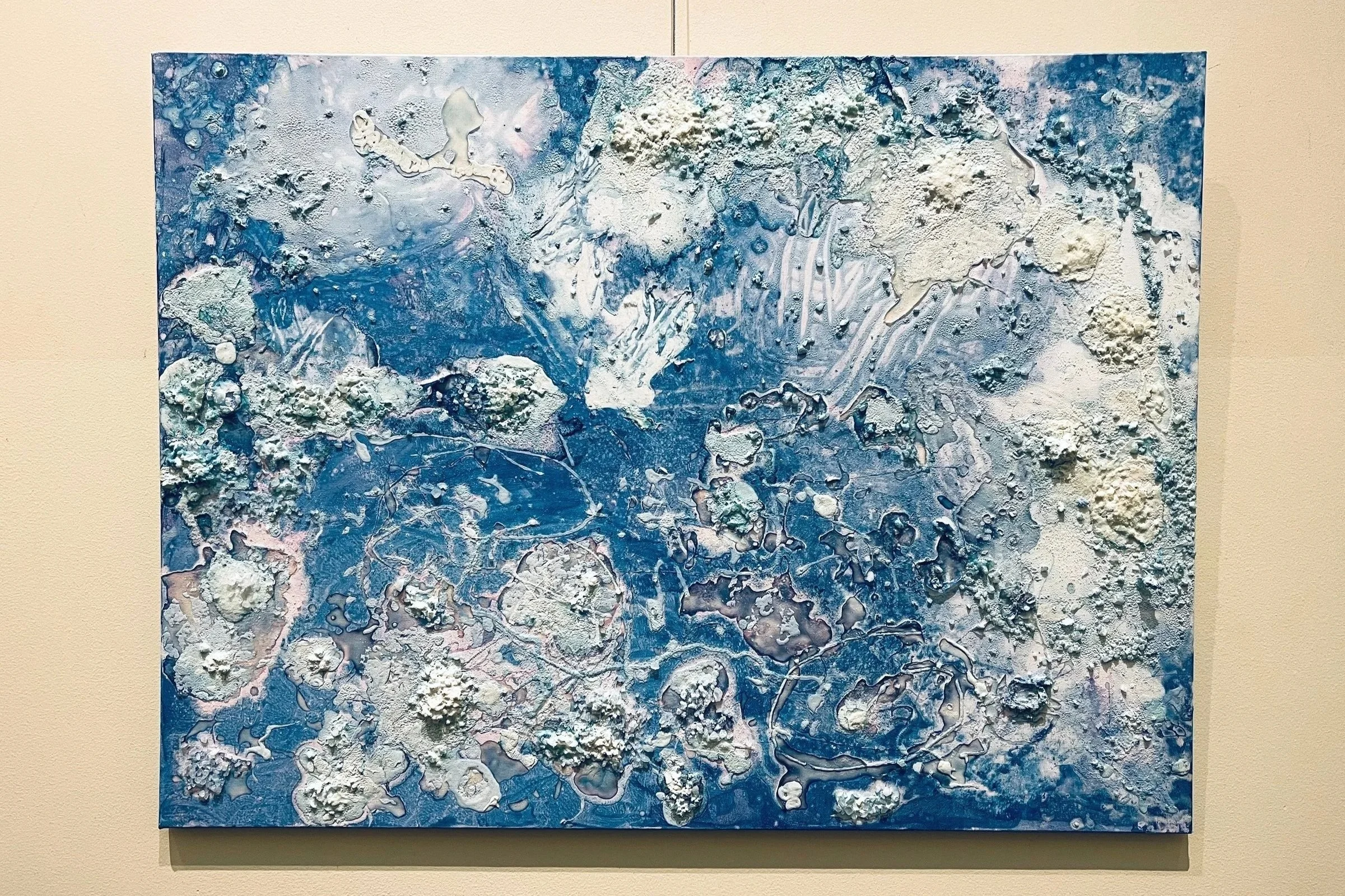
“Here are so many icicles. The river is going through the town. I am trying to cover it (glue) with snow (salt) to make ice. I am having a snow storm
”
“I can paint with no hands”
Art + Movement: Bike Designs
Learning Goal: An investigation into how our whole bodies can participate in the art-making process. Children develop gross motor skills through movement while working collaboratively on large-scale surfaces that encourage communication, shared problem-solving, and artistic exploration. Children make observations about color mixing, line, shape, repetition, and pattern.
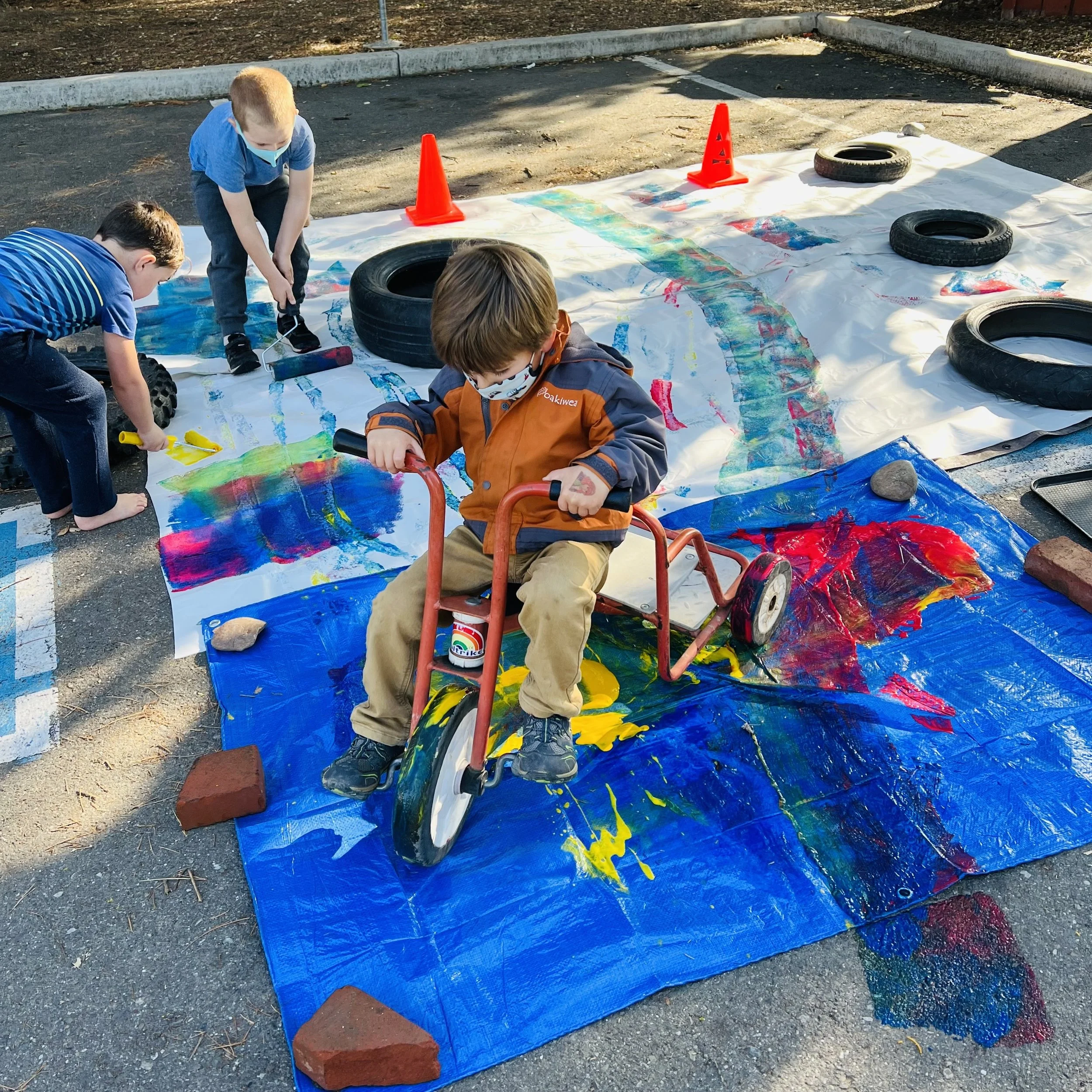
Process: Over the course of the school year, children explored painting on large surfaces. We began the school year painting on a wall with paint rollers before moving to the floor using plungers and scrubbers. As children used different tools they noticed lines and patterns they could make. Toy cars and loose tires were set out to extend the idea of movement, repetition and pattern. Then children came up with the idea of a bike design and using the tricycles to move the paint. The tricycles had recently become a source of power struggles in the outdoor classroom. This became an opportunity for children to become part of the invitation by discussing what they needed to move the paint with the bike and actually setting up the canvas, paints and cones to create a course for the bikes on the canvas.
Outcome: Children can and do use their whole bodies to paint. Children use social language skills to navigate a large painting with others. More experienced riders helped children who had less experience riding bicycles. Children learn about line, shape, pattern and color through layering paint, making circles and designs by riding the tricycle in circles or around objects. Children practiced autonomy, self regulation, executive functioning and divergent thinking through the obstacle course they built on the canvas. Children noticed they could make similar patterns in the sandbox with other tools too.
Bike Designs 1 + 2
Tempera Paint, plungers, paint rollers, tires, tricycles
Year
Fall 2021
Untitled
Glue, paint, salt on canvas.
Year
Winter 2023
“We pulled the picture apart and now we made another picture”
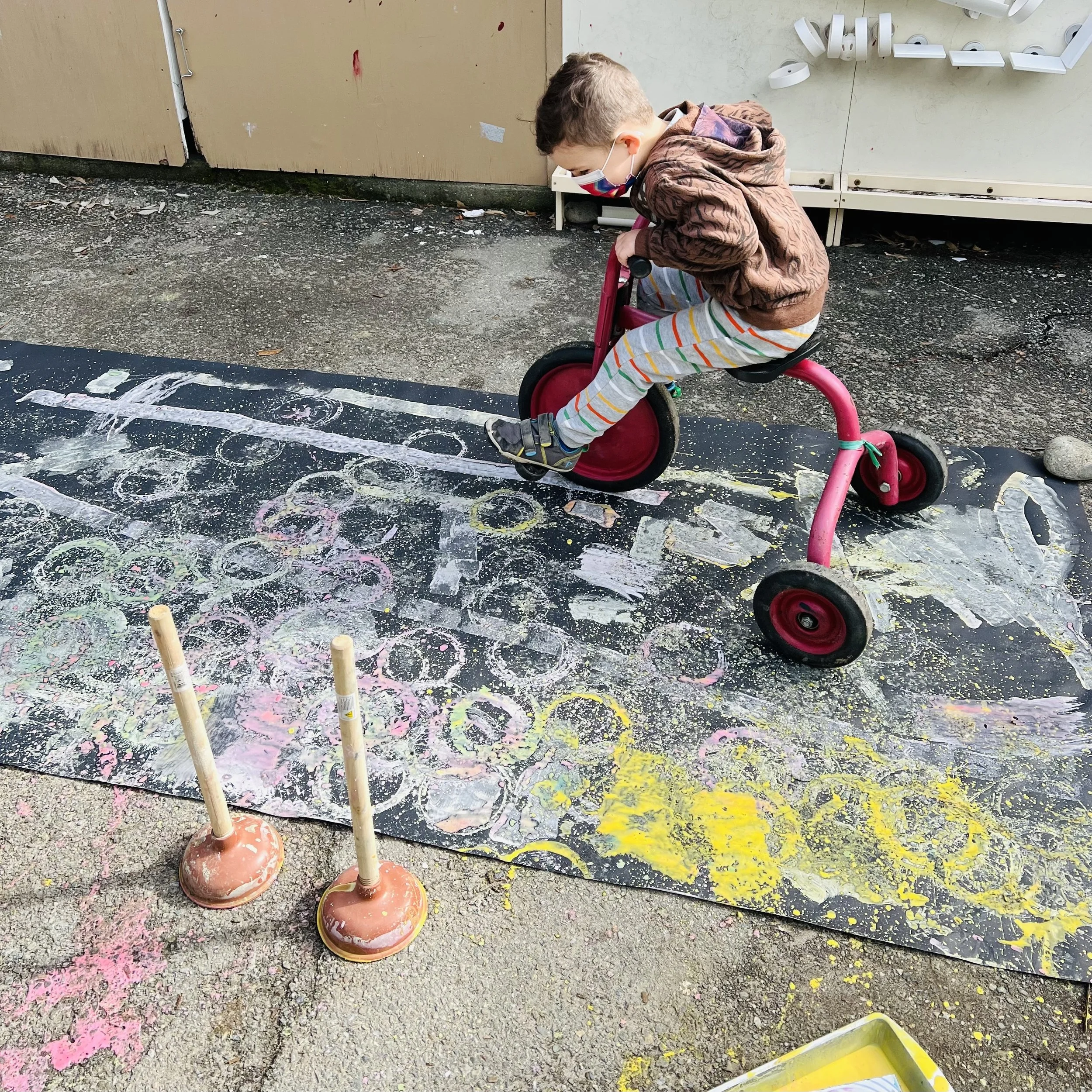
“It’s starting to look like a map”
“It’s working! Our idea (a bike design) is working!”