6-8: Guided ExplorationThis work demonstrates the bridge between open-ended early childhood exploration and more structured art instruction. Students are still learning through making and experimenting, but lessons begin to include more focused goals tied to visual art skills and standards in a public classroom setting.
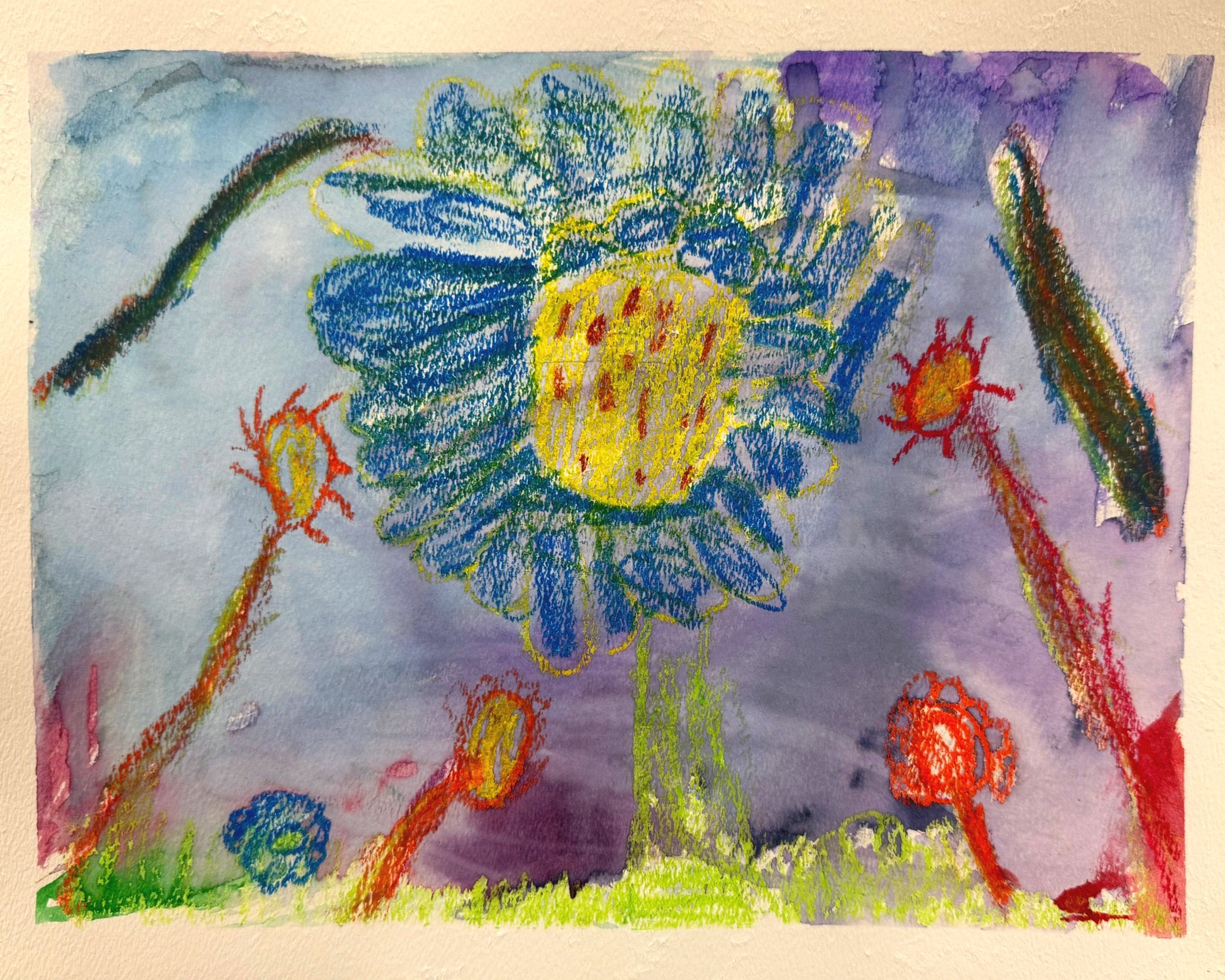
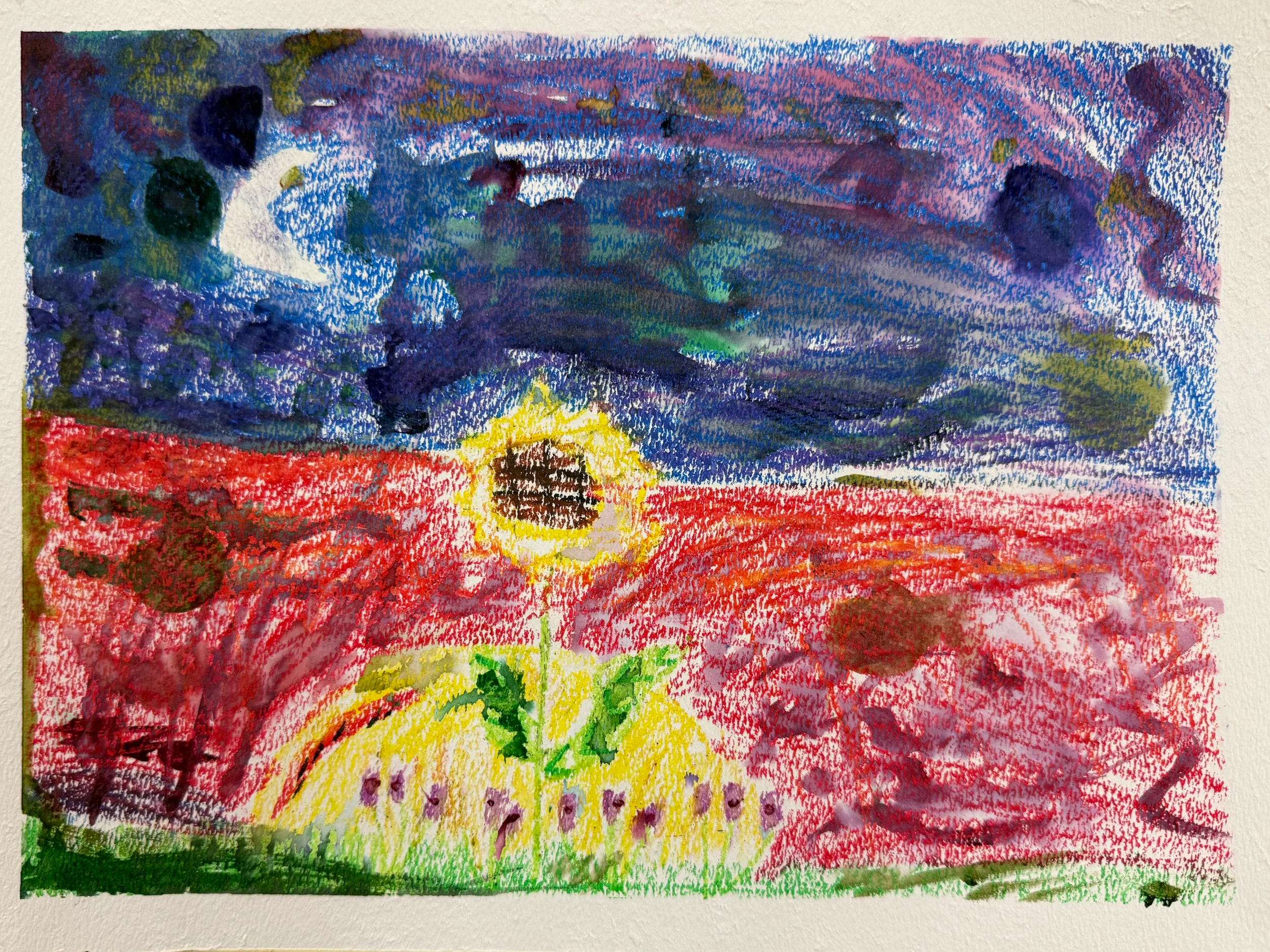
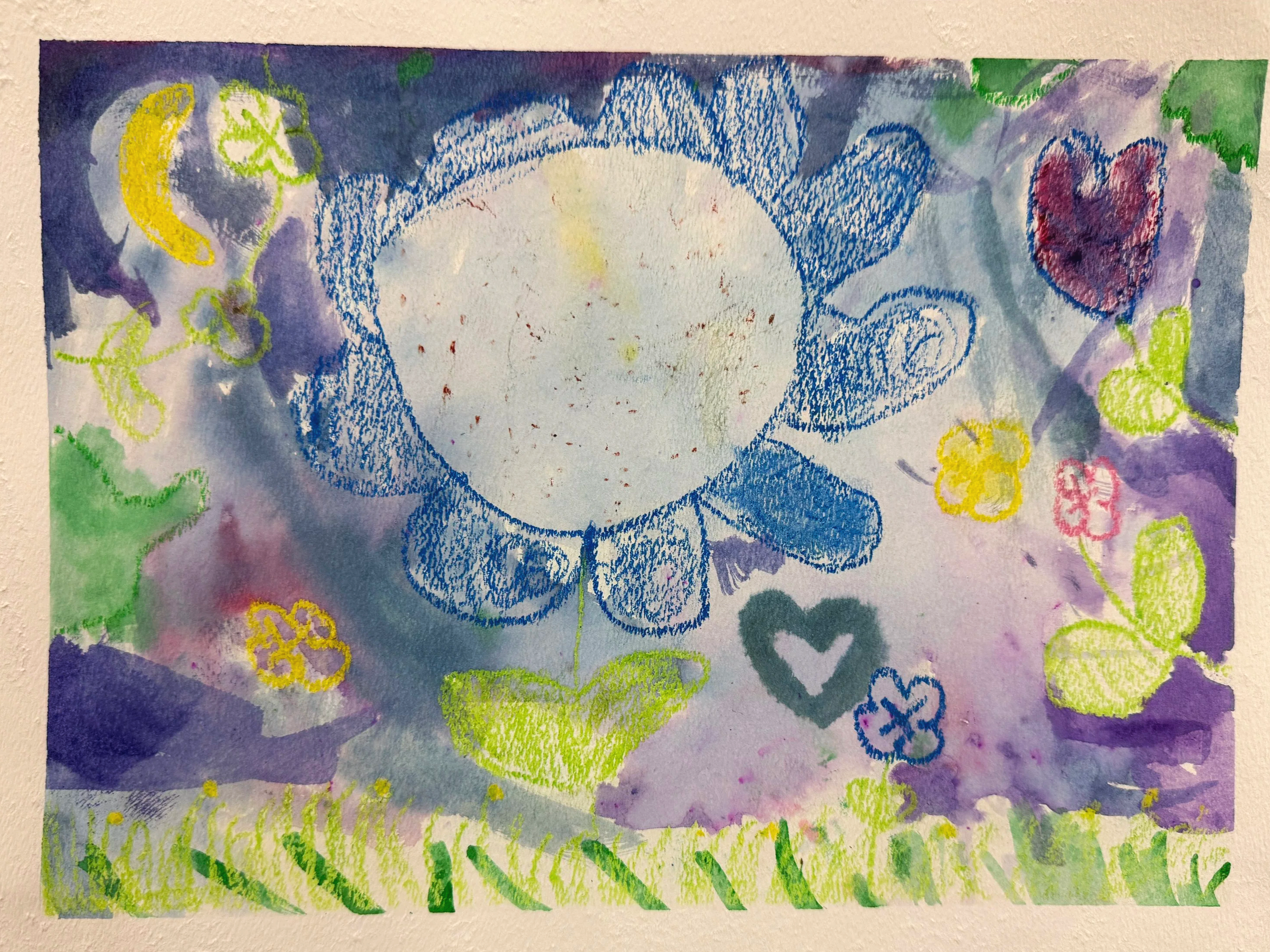
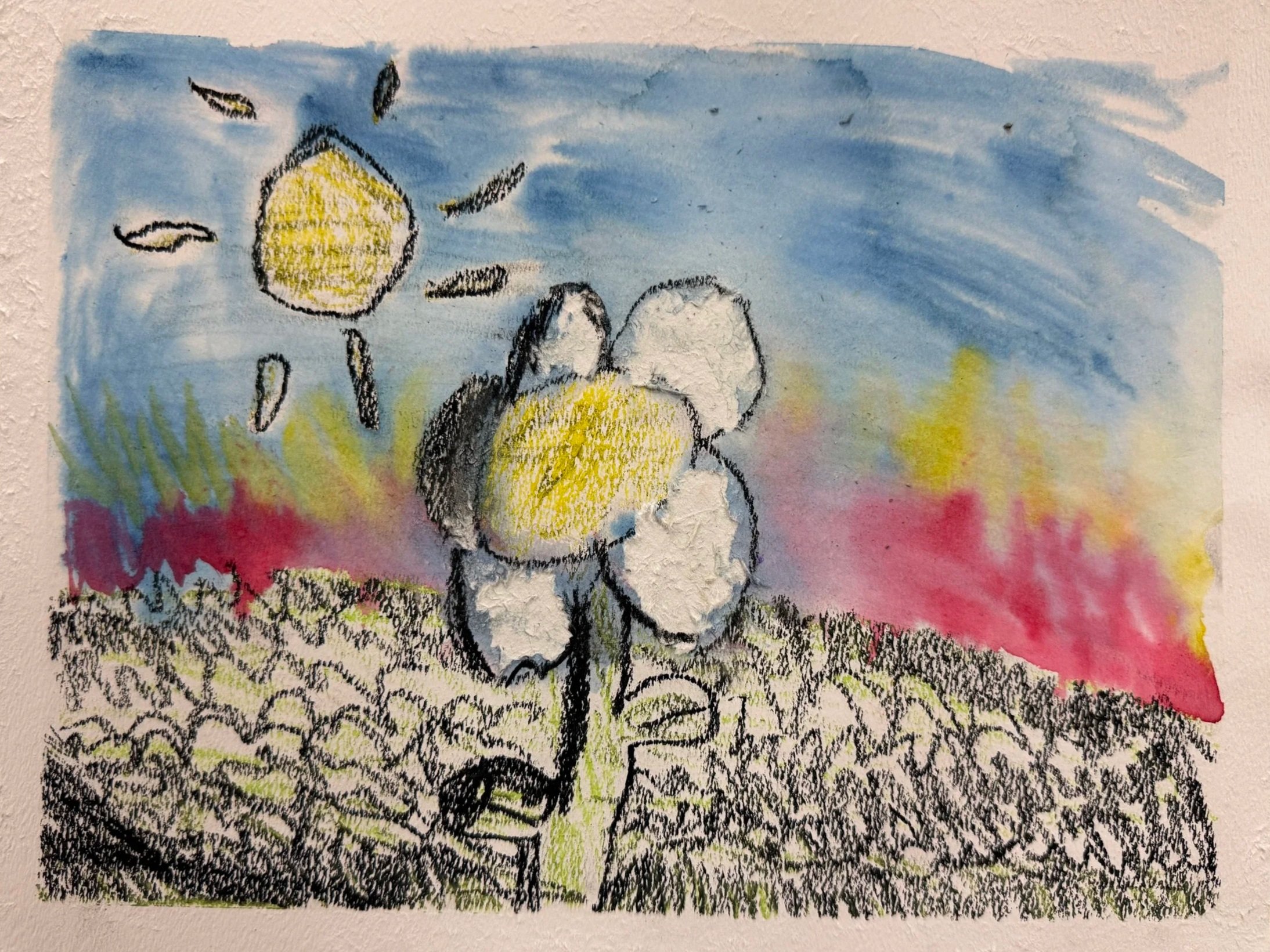
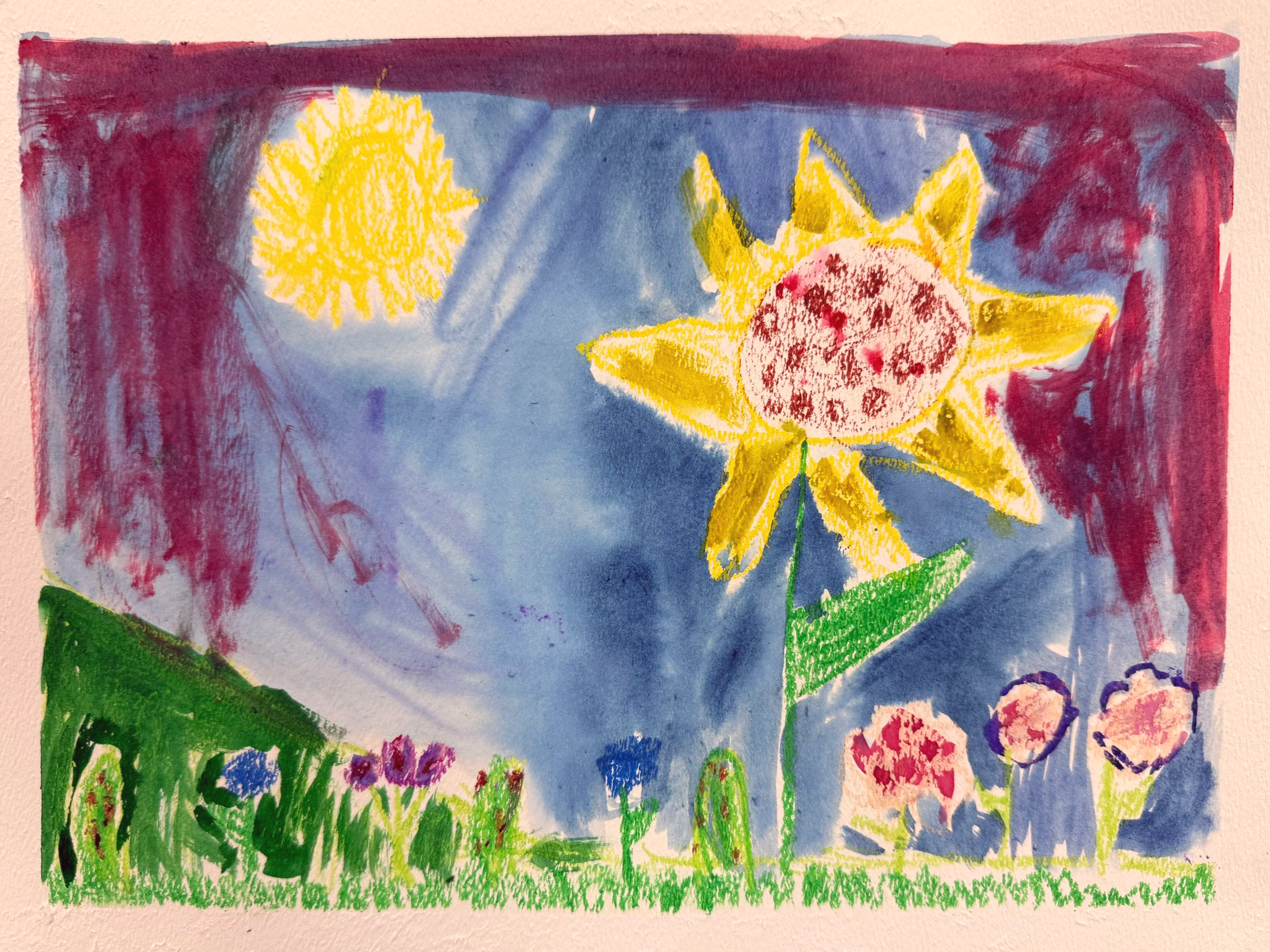
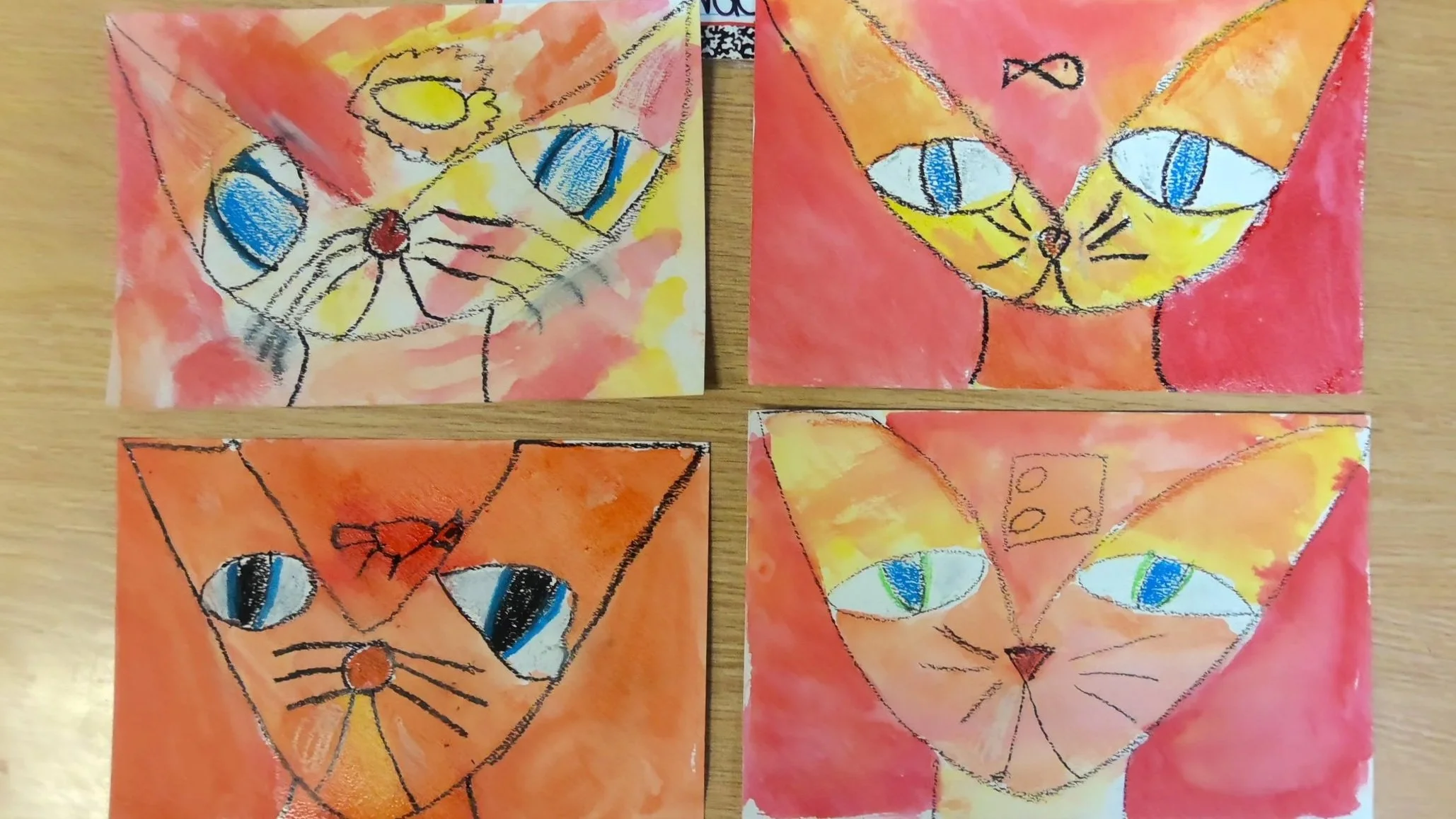
Watercolor Resists
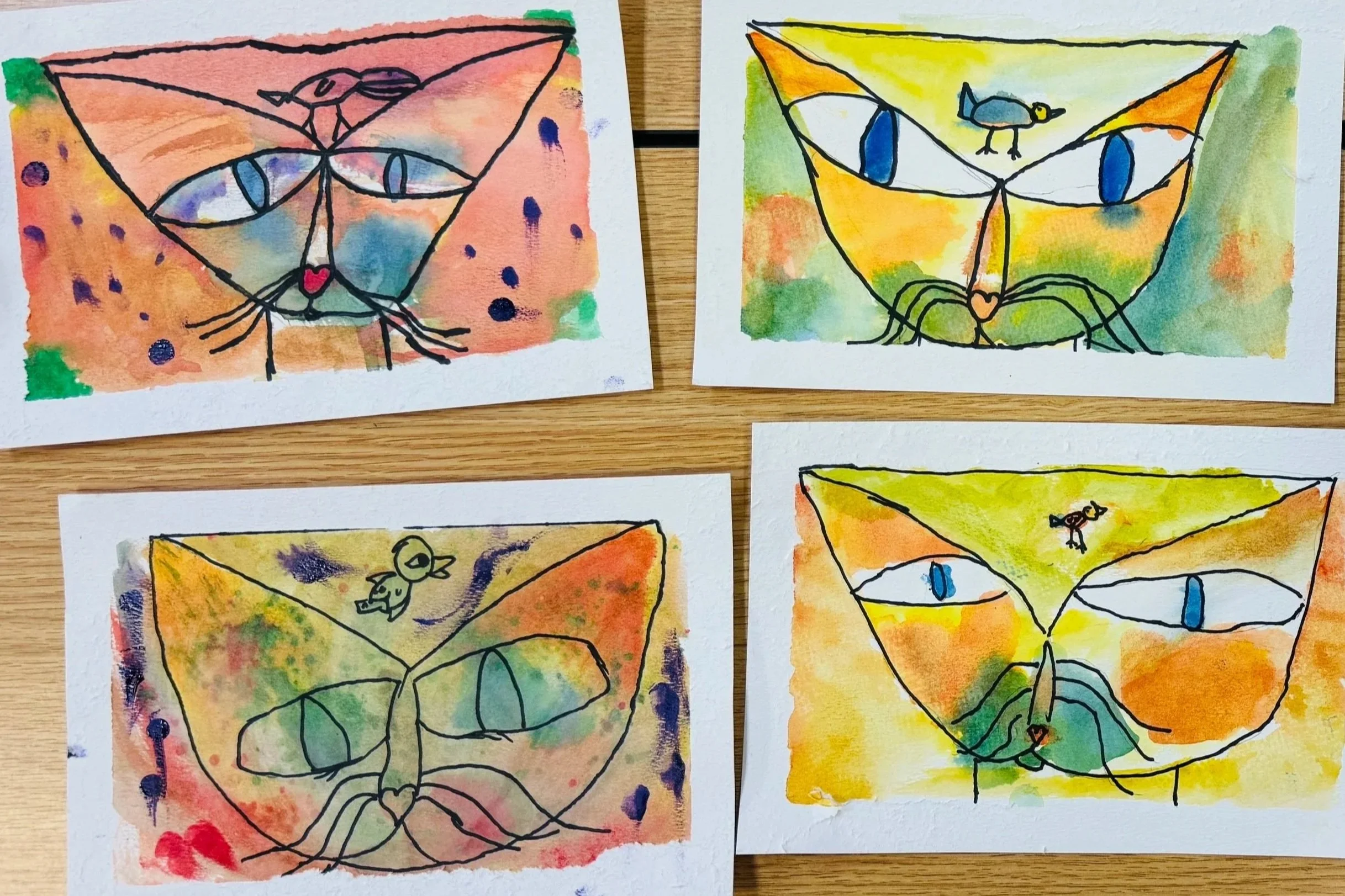
LEARNING GOAL: Students explored line, shape, and color through a mixed-media drawing inspired by Paul Klee. Students were introduced to watercolor and oil pastels, practiced color mixing, and observed how the two materials interact through the resist process.
PROCESS: The lesson starts with a reflective practice from the prior lesson and then a class discussion on artwork by Paul Klee. Students notice shapes, colors and lines they see in the artwork. After a brief introduction of materials students begin drawing with oil pastels before applying watercolors in the negative space. As we work, students notice the resist effect and many of them make the connection to science.
OUTCOME: Students gain an understanding of how two materials can work together to make an art piece. Students demonstrate prior knowledge through a new application. Students build vocabulary and observational thinking skills.
“This is like science!”
- V, 2nd grade
California Visual Art Standards: 1.2 Enduring Understanding: Artists and designers shape artistic investigations, following or breaking with traditions in pursuit of creative artmaking goals. 1.VA:Cr1.2Use observation and investigation in preparation for making a work of art.
2.1 Enduring Understanding. 1.VA:Cr2.1: Artists and designers experiment with forms, structures, materials, concepts, media, and art-making approaches. Explore uses of materials and tools to create works of art or design.
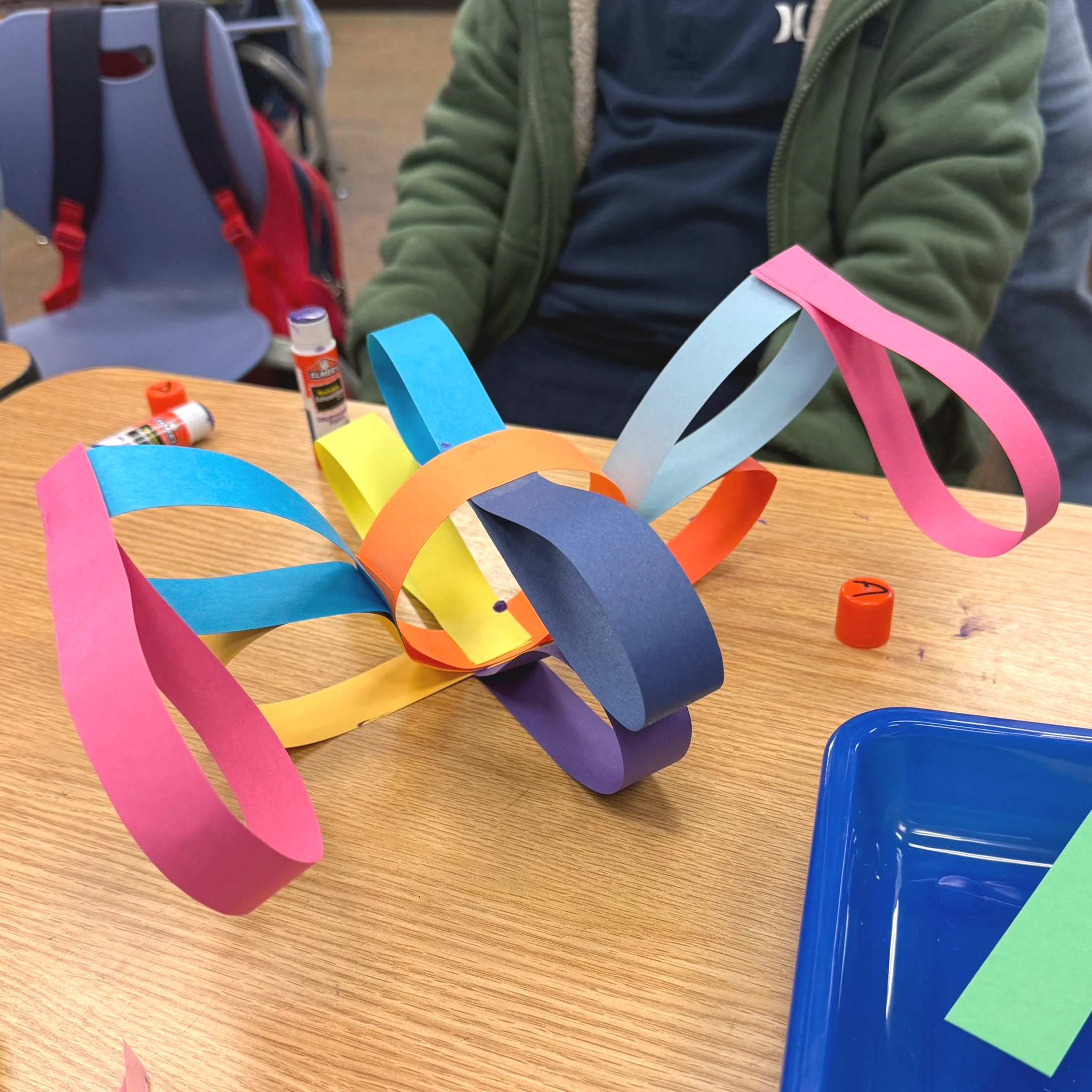
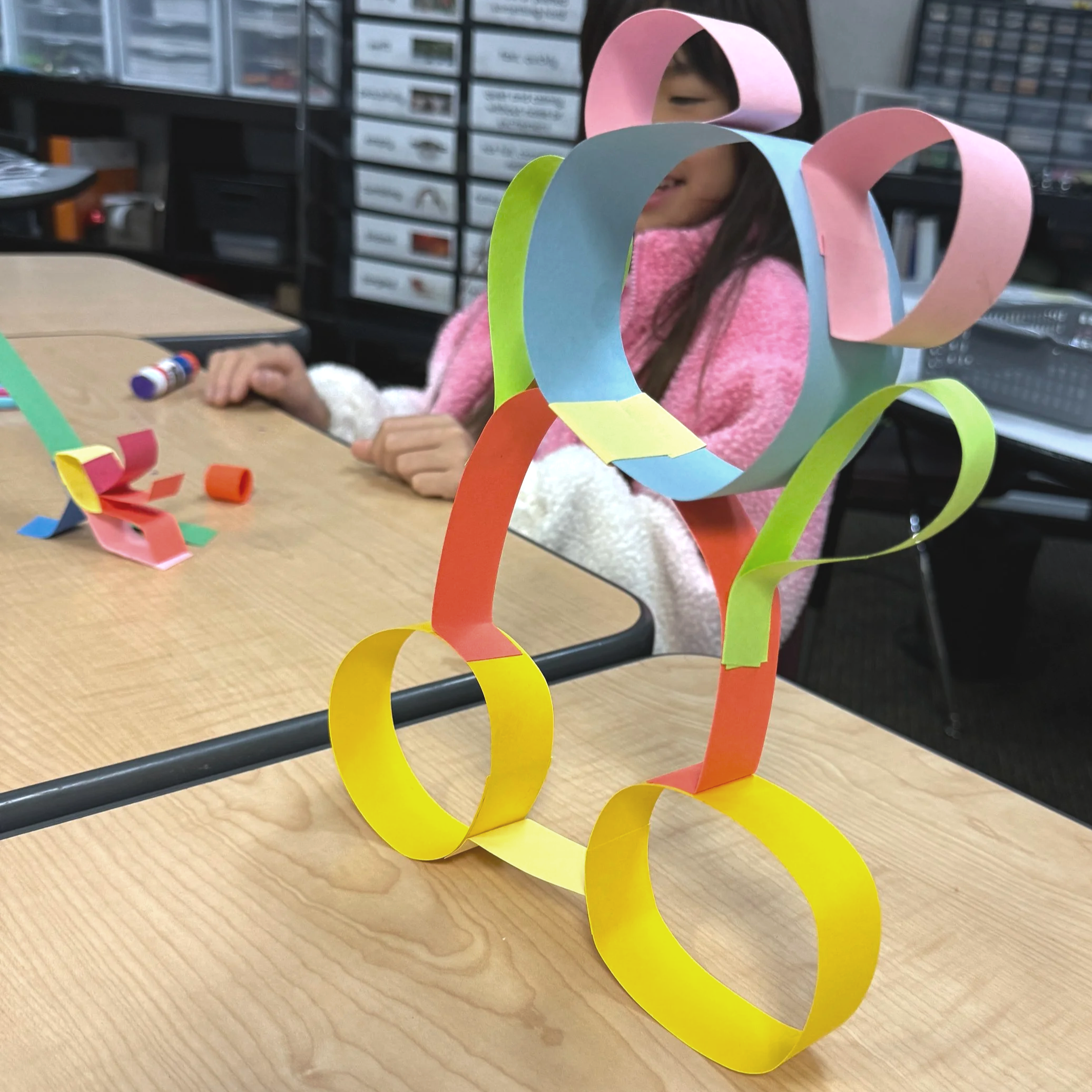
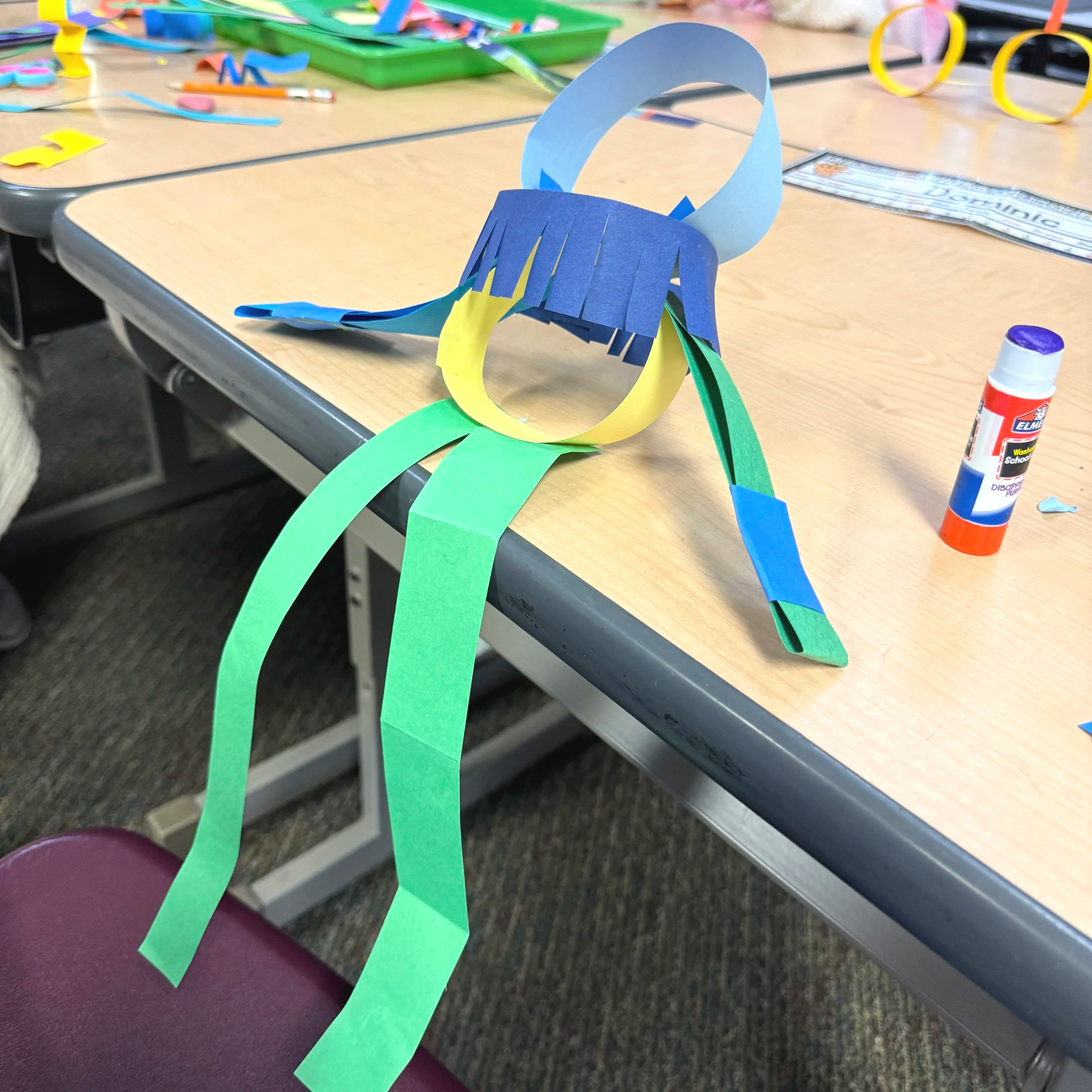
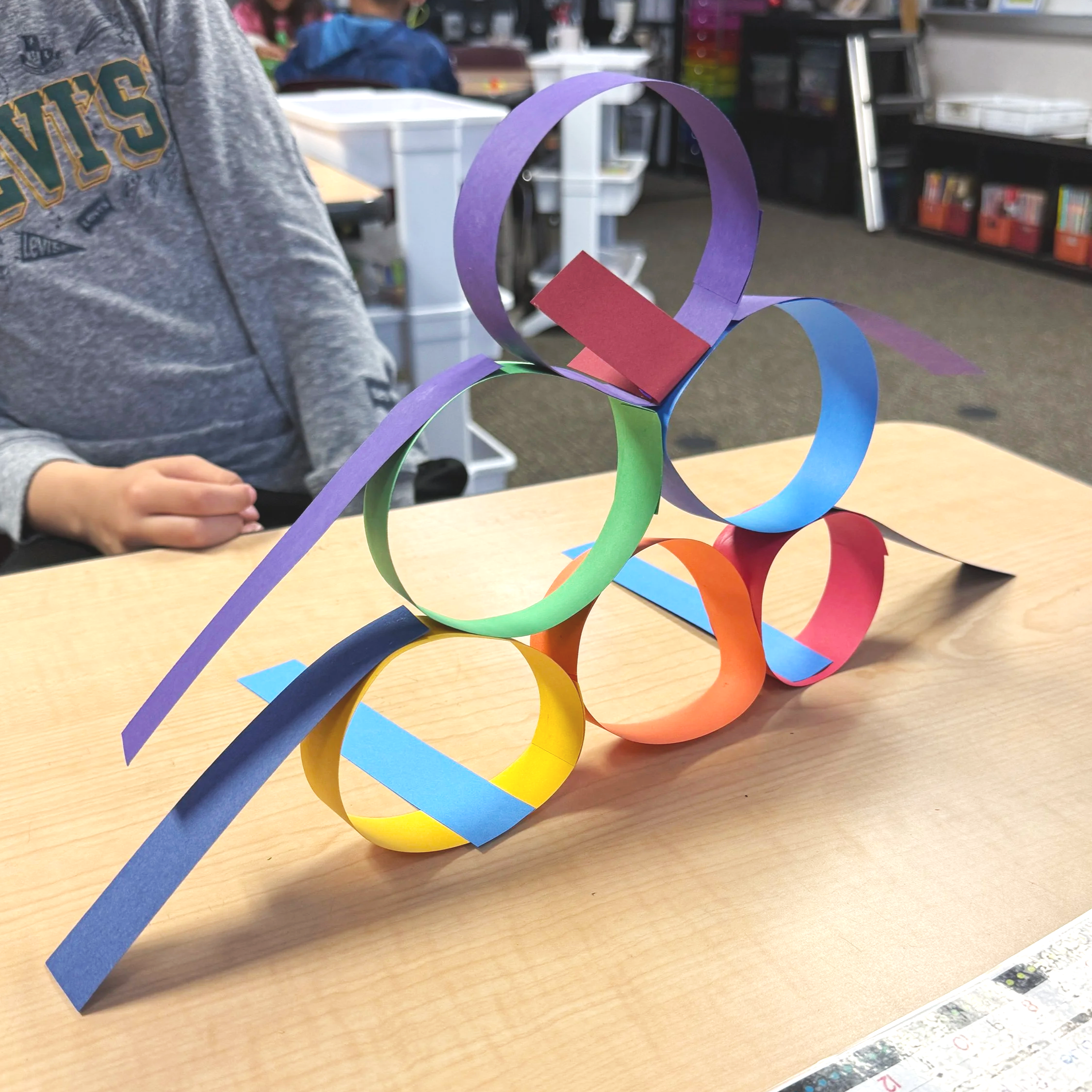
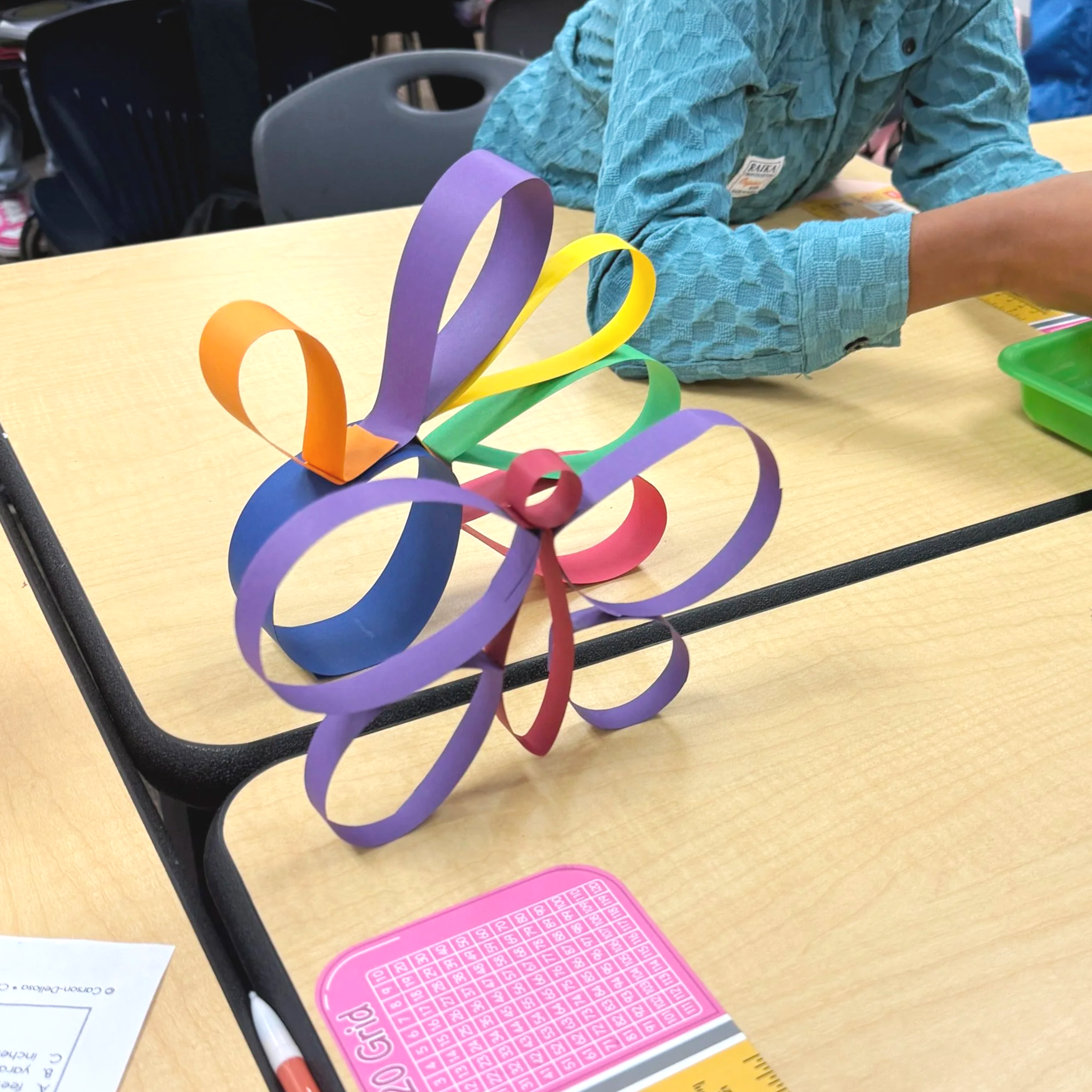
Paper Sculptures
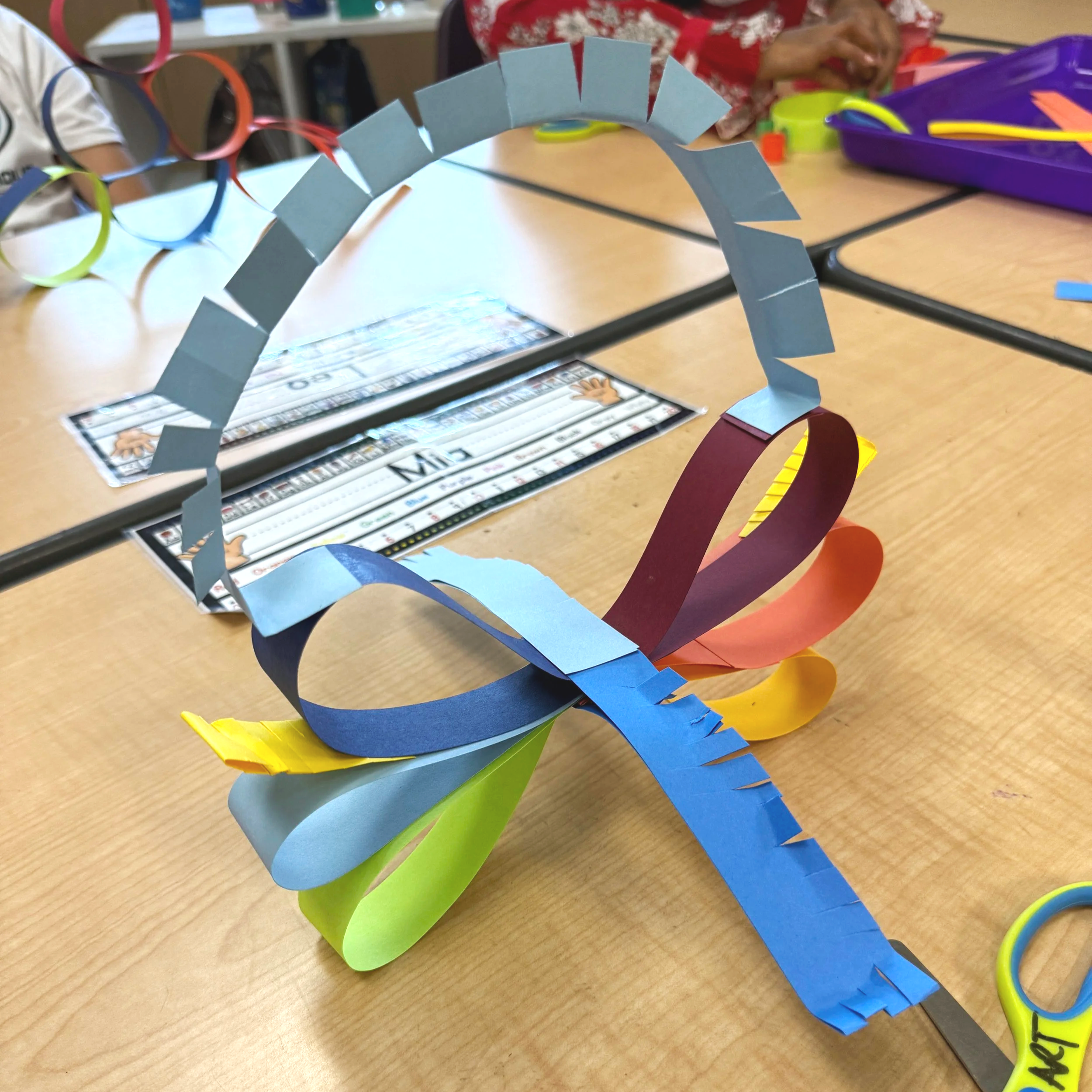
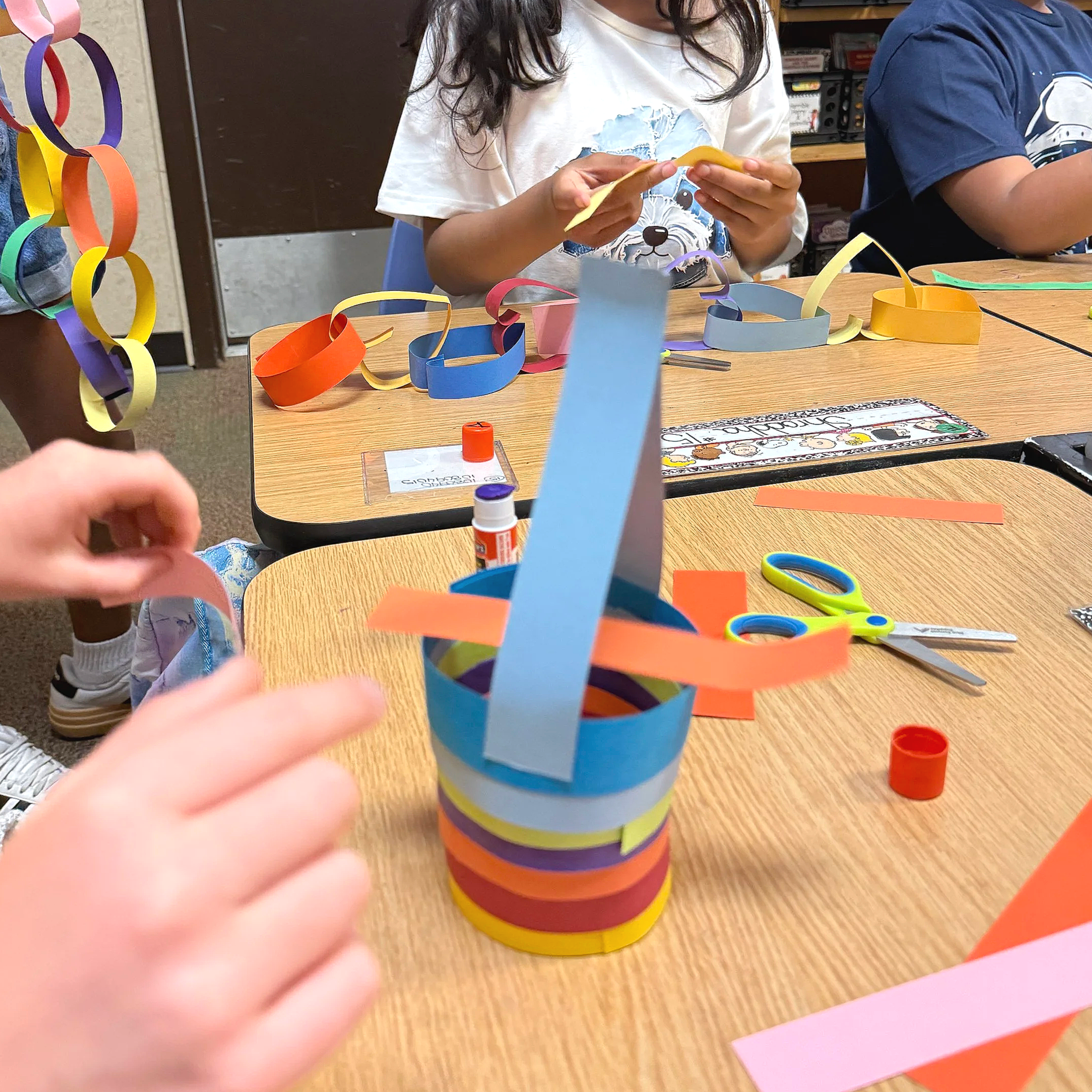
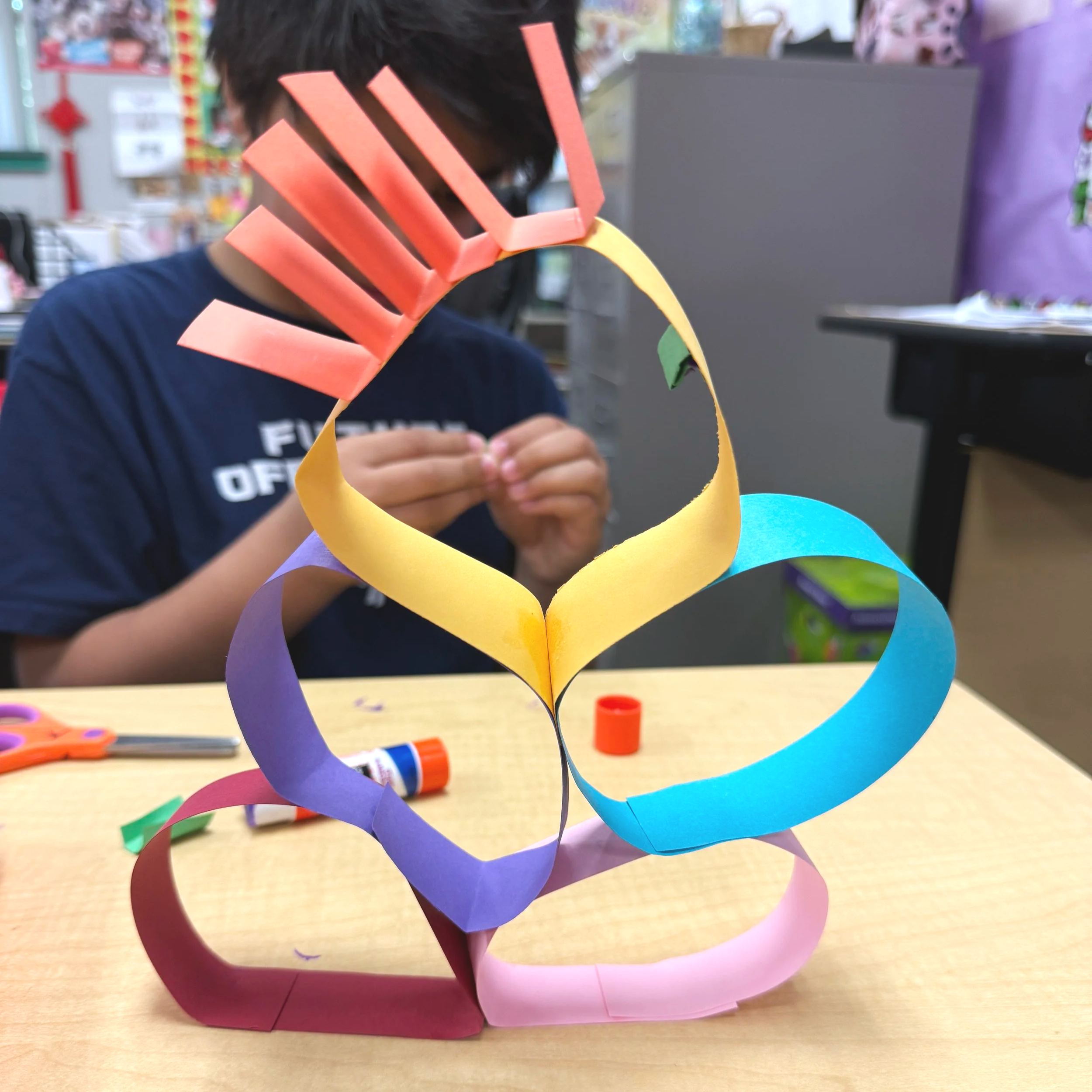
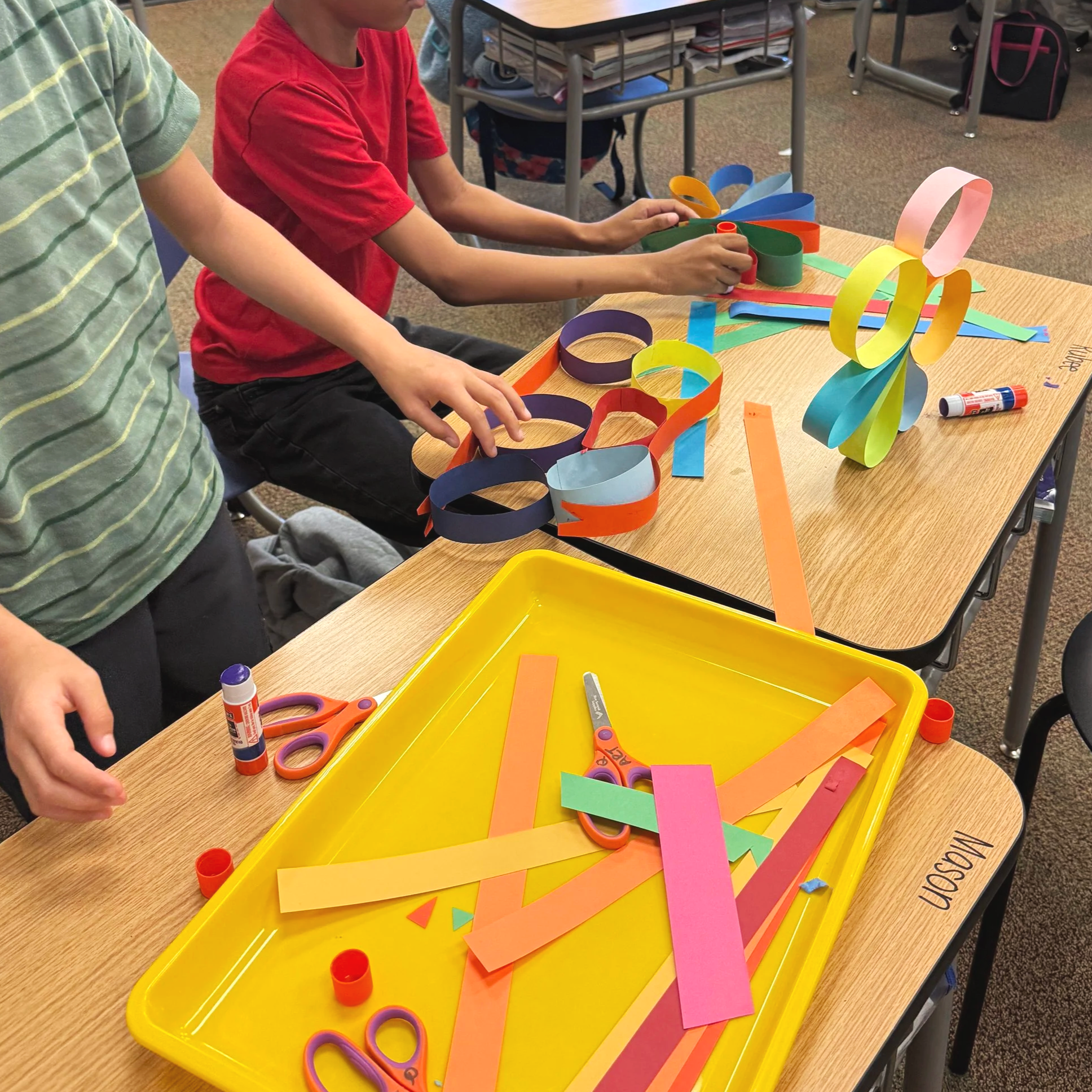
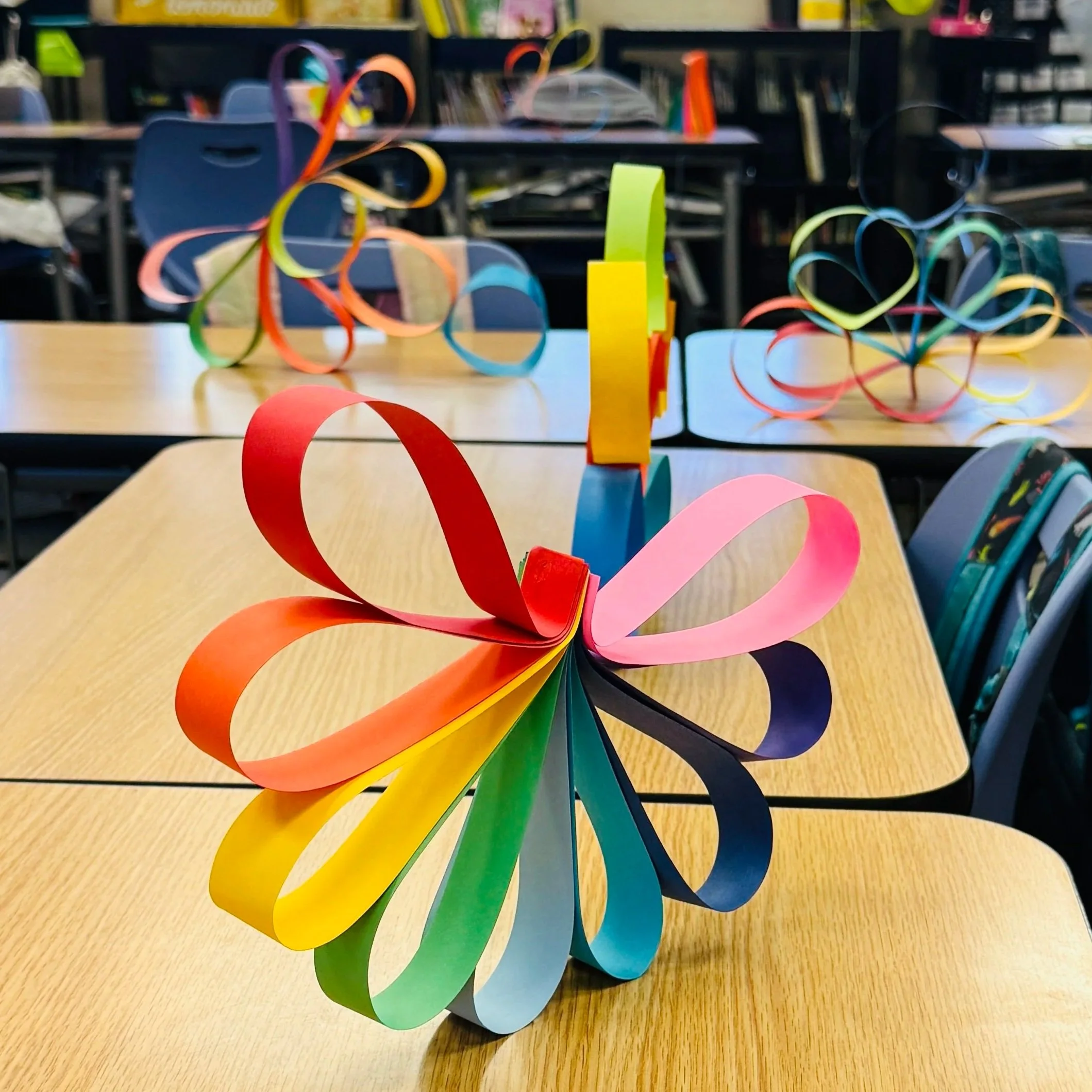
LEARNING GOAL: Students will use paper and glue to explore the elements of line, shape, and form while applying basic design and engineering concepts to create a freestanding three-dimensional sculpture.
PROCESS: The lesson begins with a demonstration on how a line can bend and curve to create shapes that can be put together to make a three-dimensional sculpture. Students are instructed to start with 6 strips of paper and challenged to make their sculptures stand on its own. Students choose their own subject matter, working abstractly or representationally. Students test, revise, and adjust their designs to make their sculptures stand.
OUTCOME: Students demonstrate spatial reasoning and creative problem-solving skills by developing initial structures and testing strategies for balance and stability. Students make creative choices in their design by working abstractly or representationally.
California Visual Art Standards: 1.1 Enduring Understanding: Creativity and innovative thinking are essential life skills that can be developed. K.VA:Cr1.1 Engage in exploration and imaginative play with various arts materials.
2.1 Enduring Understanding: Artists and designers experiment with forms, structures, materials, concepts, media, and art-making approaches. 2.VA:Cr2.1: Experiment with various materials and tools to explore personal interests in a work of art or design.